

 English
 日本語
日本語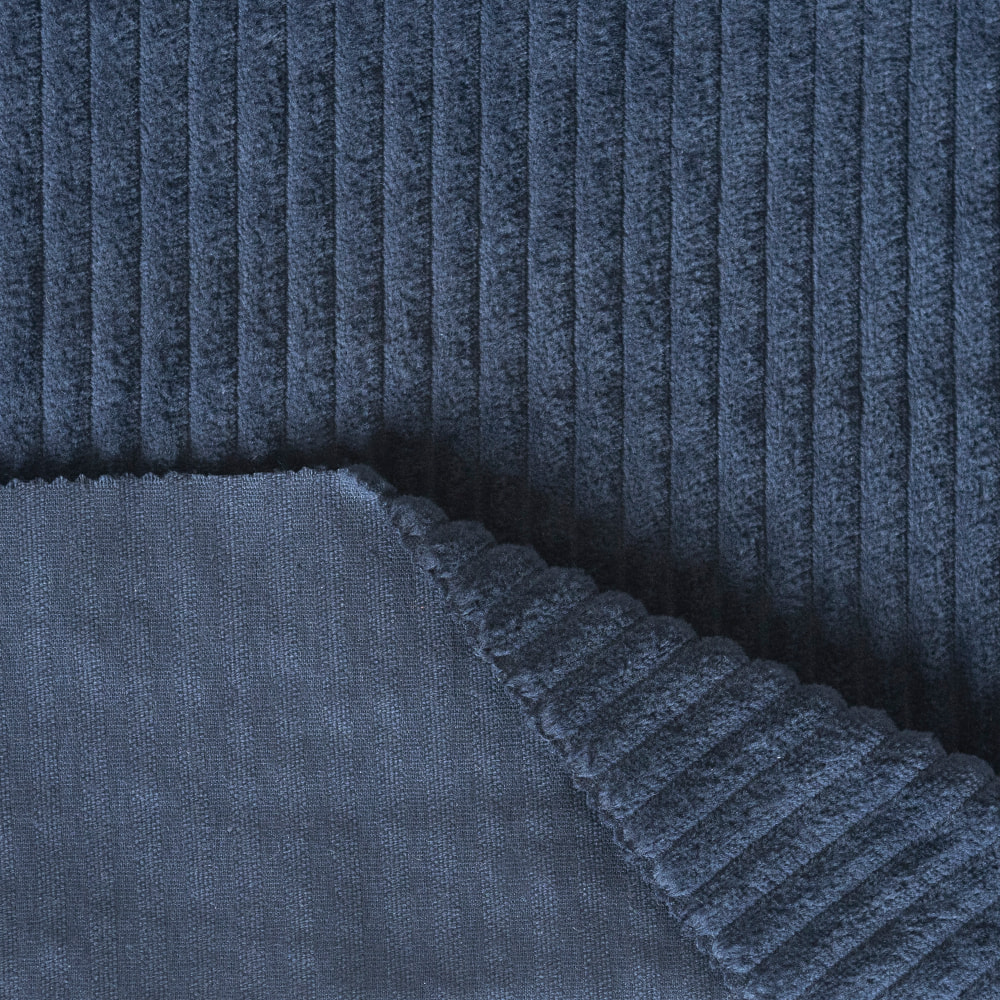


Get Directions
Textile Industry Zone, East Hutang Town, Wujin District,213100 Changzhou,China
When you select corduroy for trousers, jackets, or upholstery, the fabric's performance is determined by a set of measurable properties. The most important of these are wale count, fiber composition, stretch, weight, and durability. Getting these right matters because a 6-wale upholstery cord and a 21-wale shirt cord behave very differently in use.
Content
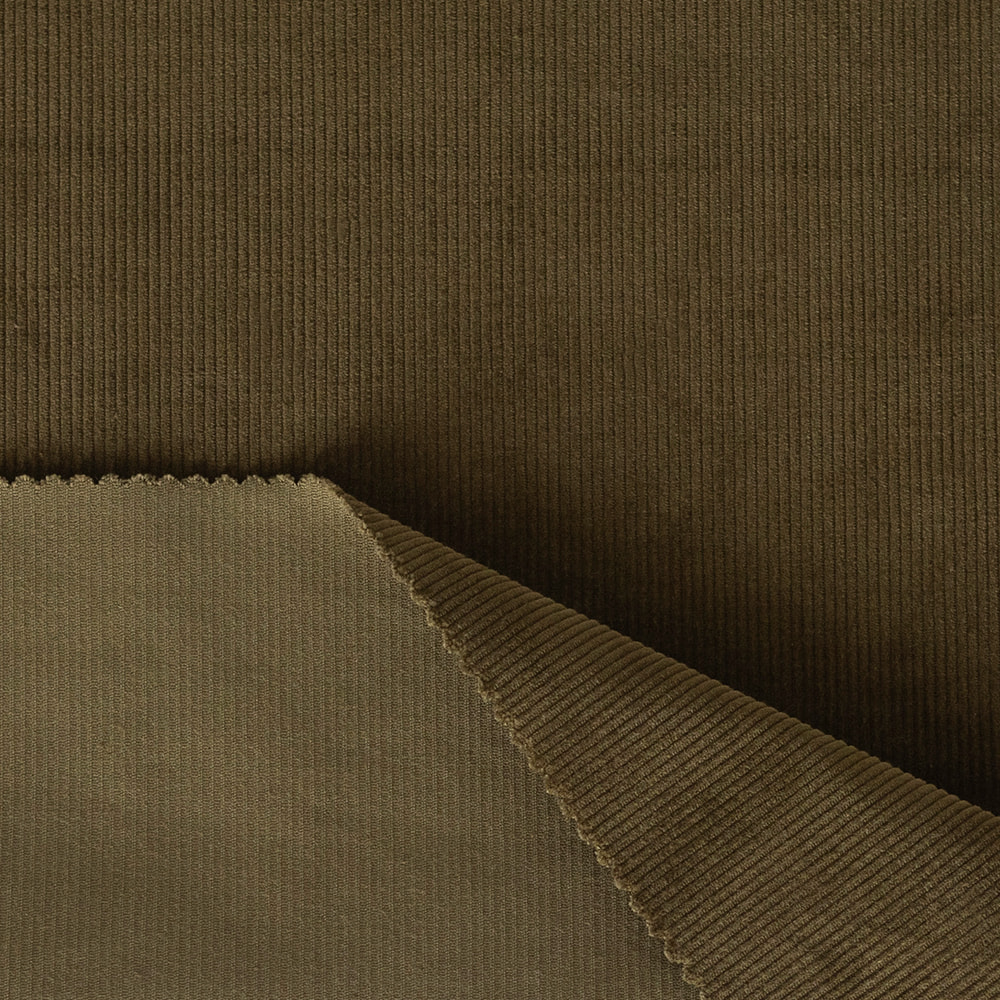
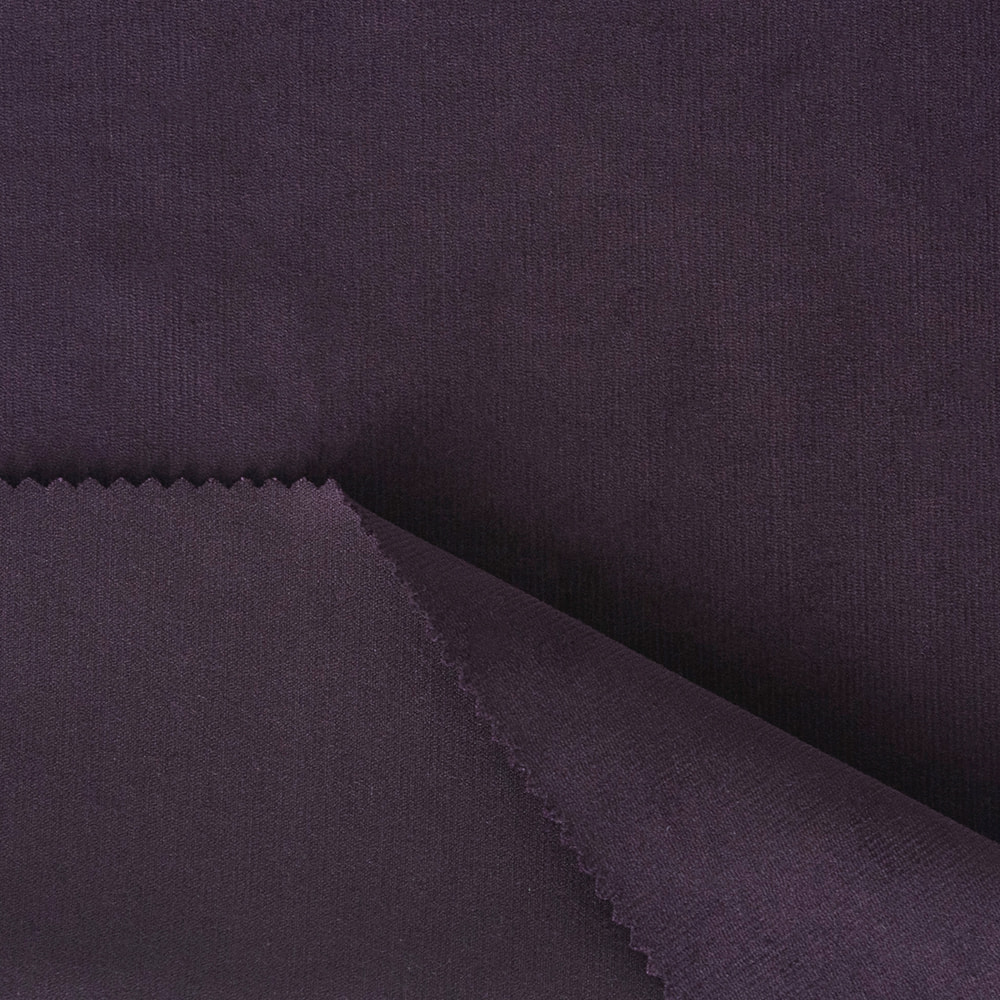
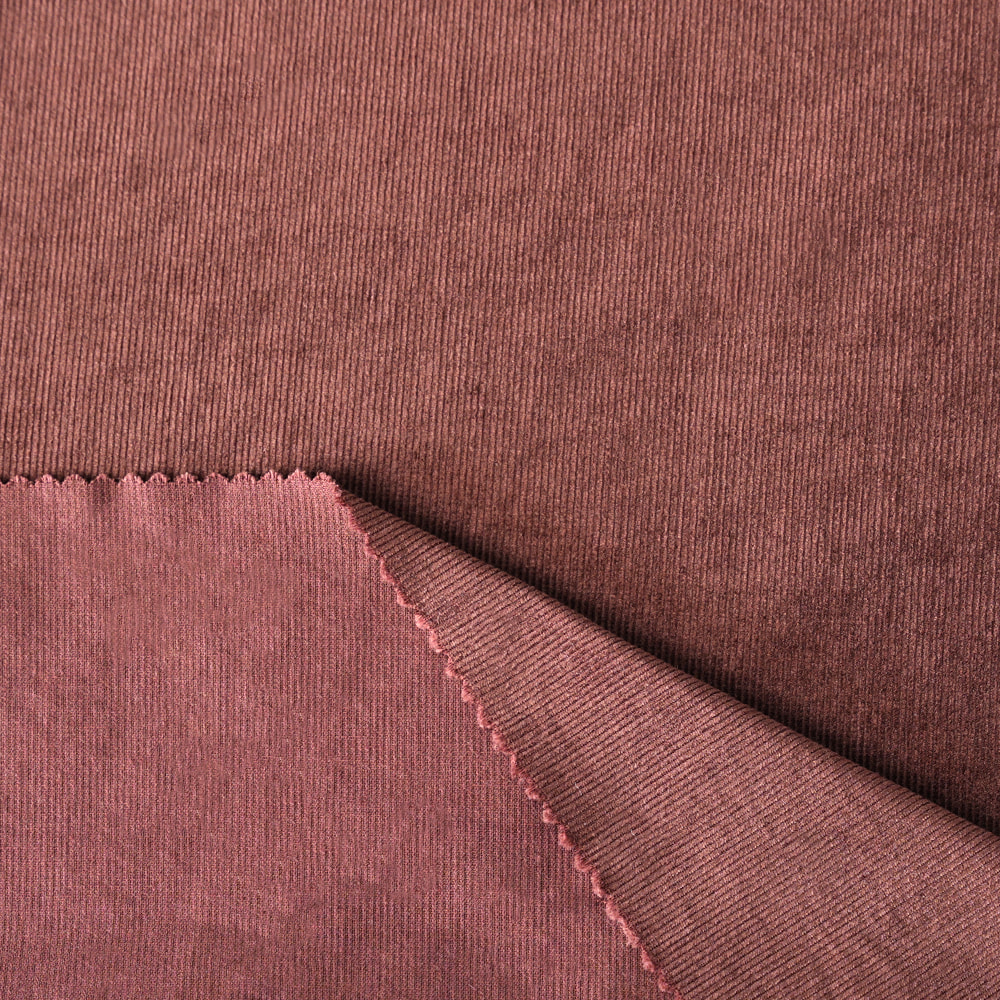
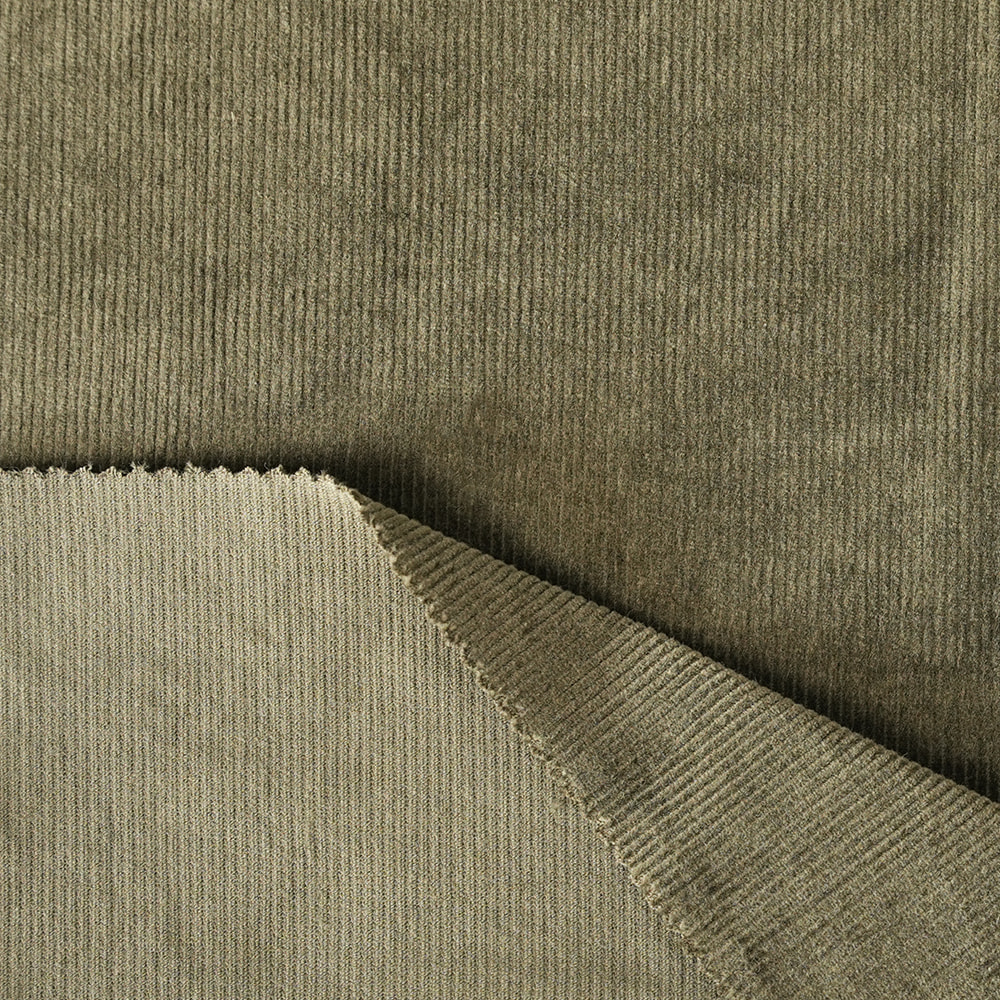
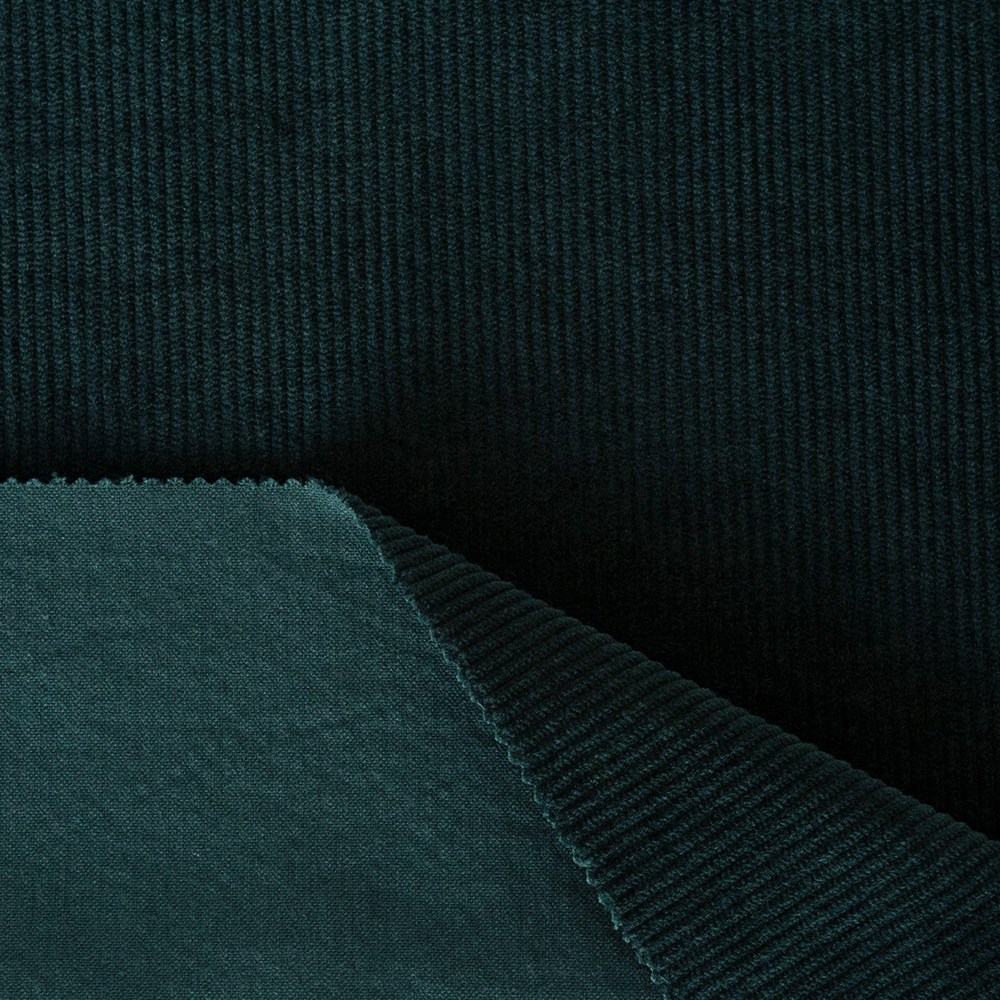
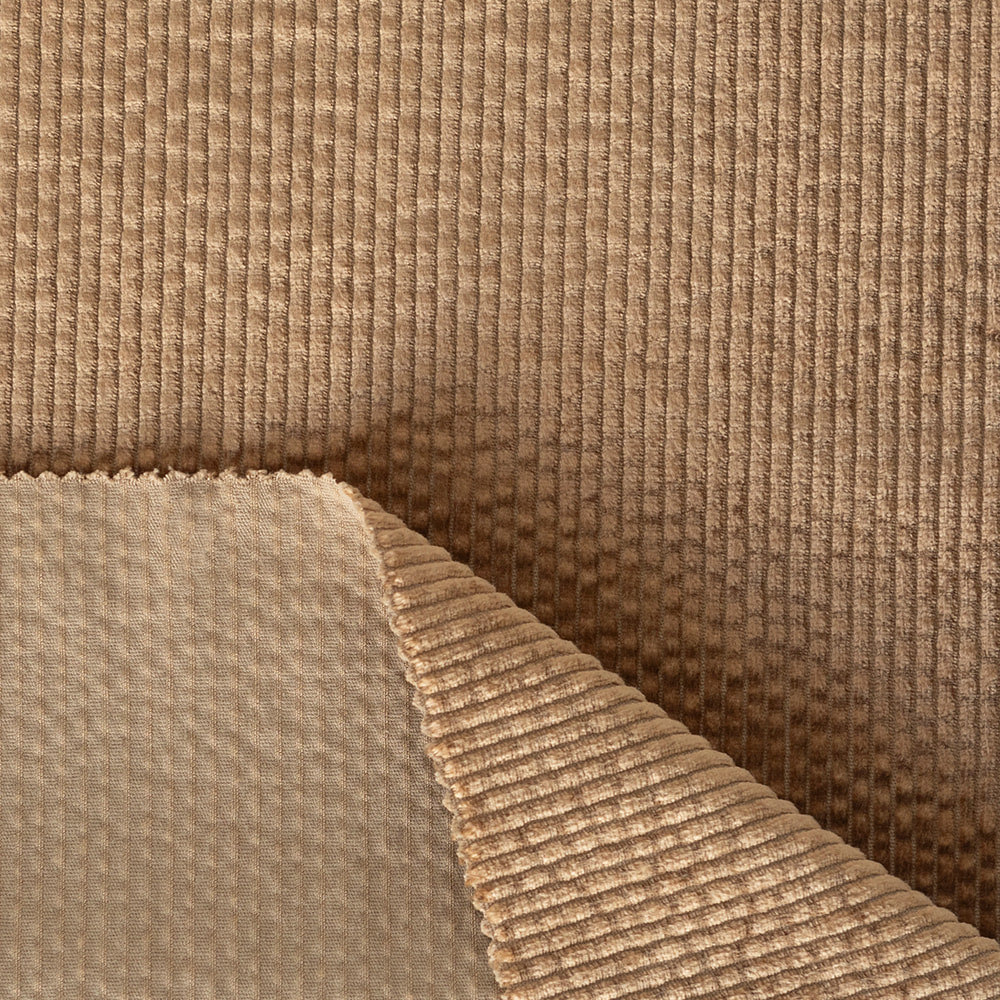
Corduroy is a cut-pile fabric with raised vertical ridges called wales. The wales are produced by weaving extra pile yarns into a ground fabric, then cutting and brushing them to create the characteristic soft surface. The cut pile creates an insulating layer of air that improves warmth and softness, while the ground weave provides strength and dimensional stability.
The properties of corduroy vary widely depending on three factors: wale count, fiber content, and the finishing method used.
| Property | Low wale count (3-8 wales) | Medium wale count (10-16 wales) | High wale count (18-25 wales) |
|---|---|---|---|
| Wale width | Wide ridges, visually bold | Medium ridges, balanced | Fine ridges, smooth appearance |
| Weight | Heavy, often 300-400 gsm | Medium, typically 200-300 gsm | Light, around 120-200 gsm |
| Durability | High resistance to abrasion | Moderate to high | Lower, more prone to crushing |
| Warmth | High due to thick pile | Medium | Lower, suitable for milder weather |
| Best uses | Upholstery, heavy jackets | Trousers, dresses, skirts | Shirts, lightweight blouses, children's wear |
Standard all-cotton corduroy has very low stretch and recovery. Adding elastane or spandex creates stretch corduroy that recovers well, making it more comfortable for fitted trousers and household items that need to hold their shape. The stretch mechanism is typically weft-direction stretch, meaning the fabric stretches across the width rather than along the length. For activewear or workwear requiring freedom of movement, a corduroy with 8-12% elastane content is a common specification.
For example, a 12-wale stretch corduroy used for trousers can provide enough give around the knees and hips while retaining its silhouette. A non-stretch 3.5-wale thick cotton corduroy, on the other hand, is chosen for durability over comfort, ideal for furniture where repeated abrasion occurs.
When comparing stretch corduroy options, check both the mechanical stretch percentage and the recovery after repeated wear. A fabric that stretches too far without returning to its original dimensions will sag at the elbows and knees.
Corduroy is not always 100% cotton. Blending other fibers changes the hand feel, breathability, moisture-wicking, and sustainability profile. The following table summarizes common blends used in modern corduroy production.
| Fiber blend | Key property changes | Typical applications |
|---|---|---|
| 100% cotton | Soft, breathable, natural, lower elasticity | Shirts, dresses, upholstery |
| Cotton + spandex | Adds stretch and recovery, retains cotton comfort | Trousers, jackets, home textiles |
| Tencel + cotton | Enhances drape, softness, and moisture management | Shirts, casual pants, bib overalls |
| Rayon + cotton | Smoother handle, richer color, less durable than pure cotton | Dresses, skirts, fashionable outerwear |
| Modal + cotton | Softer and silkier, better resistance to fading | Coats, pants, hats, sewing projects |
| Polyester + rayon + cotton | Increases wrinkle resistance and durability, lowers breathability | Casual pants, coats, home textiles |
If sustainability is a priority, Tencel and modal are derived from renewable wood sources, while rayon (viscose) has a heavier environmental footprint depending on the production process. For a greener alternative, choose a Tencel cotton corduroy or a modal cotton blend with a lower chemical impact.
Wale count is a core property that drives both aesthetics and functional suitability. It is measured as the number of wales per inch of width. A higher wale count means finer ridges, lighter weight, and a softer hand, while a lower wale count produces bold, chunky lines and a heavier, harder-wearing fabric.
When planning production runs, you should weigh the following:
For children's wear, a soft 21W non-stretch cotton corduroy minimizes irritation and is gentle on the skin. For upholstery, a 6W rough cotton corduroy offers the pile thickness and abrasion resistance needed to survive furniture wear.
Durability is largely a function of cotton fiber length, weave density, and pile height. Longer staple cotton creates a stronger ground weave and resists pilling better. The cut pile of corduroy can crush or flatten over time, especially in high-friction areas. A dense, low-pile corduroy (such as 21W) is less prone to crushing than a high-pile 6W fabric.
Proper care extends corduroy life. Wash inside out in cold water, turn down the dryer heat, and avoid fabric softeners that leave residue on the pile. When ironing, use a steam setting on the back side to restore the raised ridges.
For upholstery applications, look for corduroy with a tight weave and a durable finish. A polyester-rayon cotton blend with a denim-style finish can offer increased abrasion resistance while maintaining the soft ribbed texture.
To see how these properties are applied to actual products, consider a few examples from a specialized corduroy manufacturer:
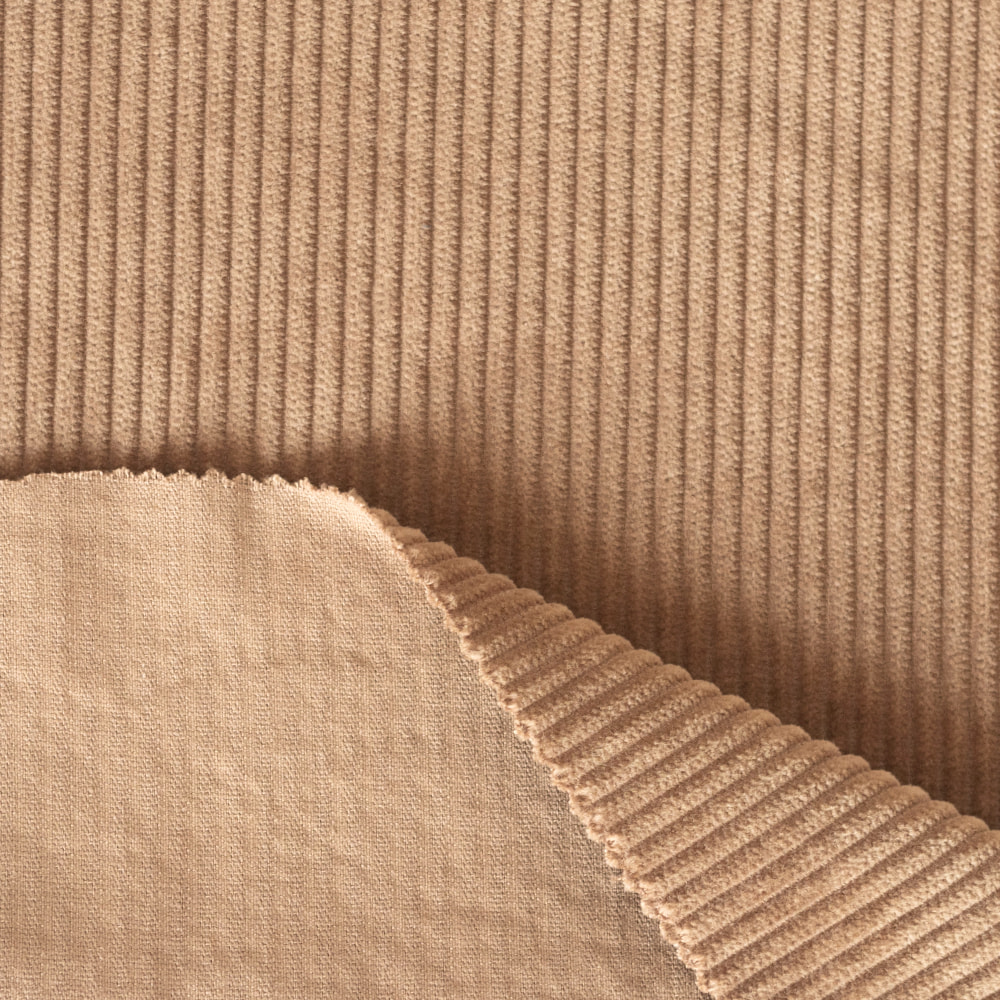
 KLD10063 3.5W Wear-resistant Non-Stretch Thick Cotton Corduroy Fabric3.5W Non-Stretch CorduroyView Product →This 3.5W thick cotton corduroy is a non-stretch construction used for durable workwear and upholstery. Its wide wales and high weight make it a strong candidate for furniture where abrasion resistance outweighs softness.
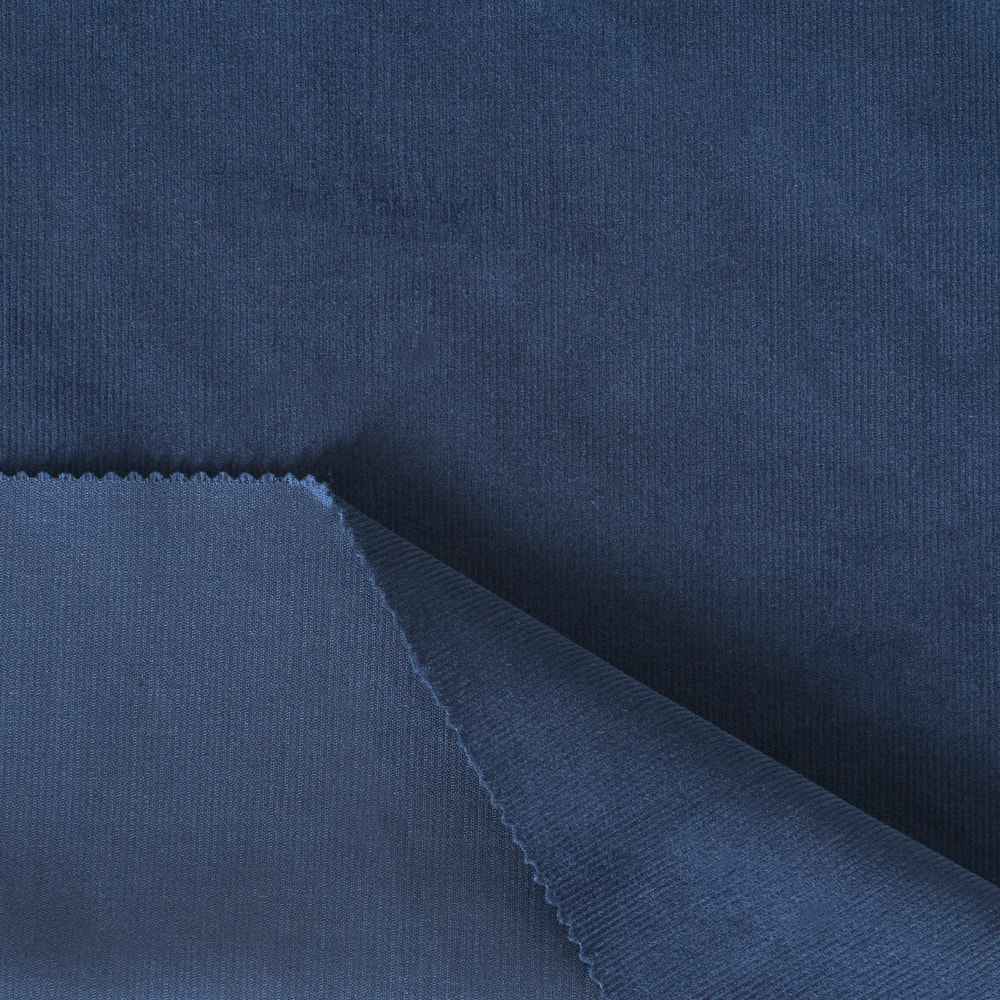
 KLD10593 21W Tencel-Cotton Fine Wale Corduroy Fabric for shirts, casual pants, Bib overall21W Tencel-Cotton Corduroy FabricView Product →A 21W Tencel cotton fine wale corduroy offers a softer hand and improved moisture management, which is why it is specified for shirts, casual pants, and bib overalls.
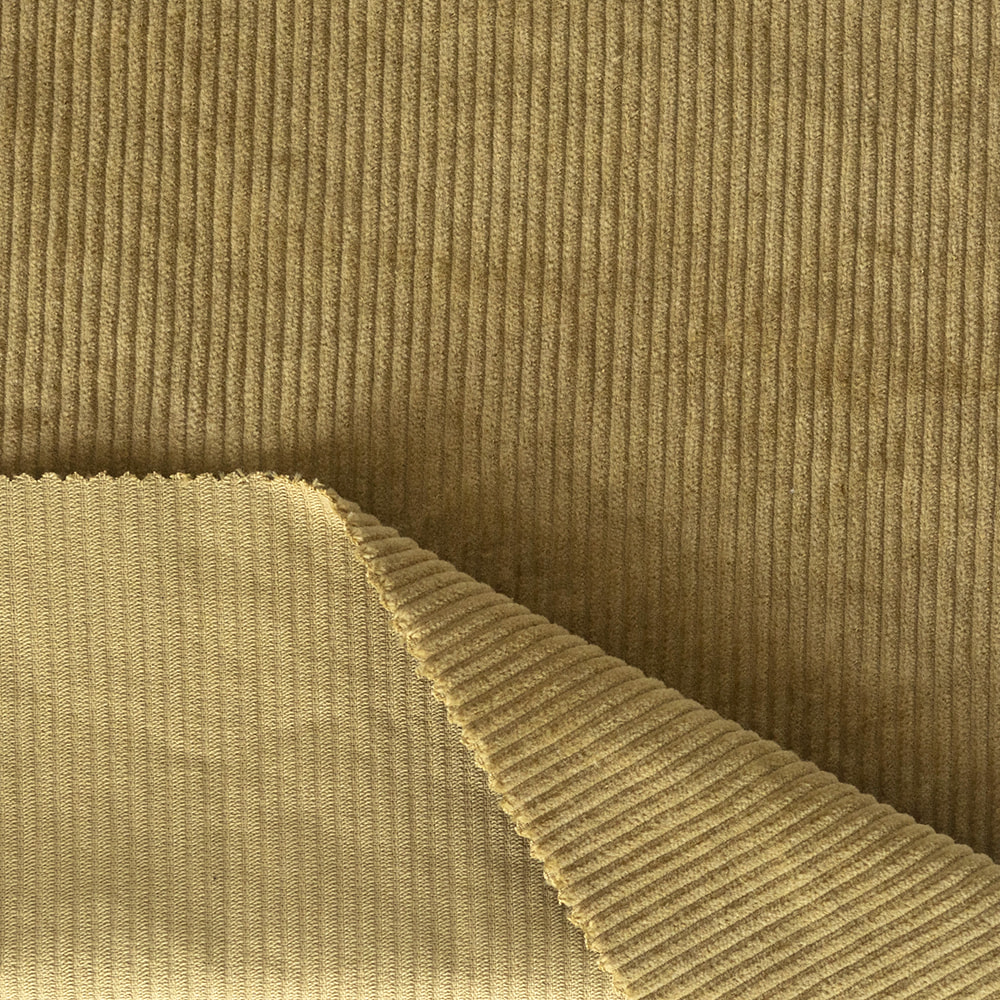
 KLD10297 12W Stretch Knit Corduroy Fabric for Dresses, Shirts, Pants12W Stretch CorduroyView Product →For dresses, shirts, and trousers that require motion comfort, a 12W stretch knit corduroy combines elasticity with a medium weight that drapes well.
Before sourcing, always check the exact specifications. The wale count, fiber percentage, stretch percentage, and weight all need to be certified against your end-use requirements. A fabric that looks right in a swatch may fail during production if the stretch recovery or abrasion resistance is below standard.
Please feel welcome to contact our friendly reception staff with any general call us

+86 139 6116 7127

Email: cloud@jacquardcloth.com

Textile Industry Zone, East Hutang Town, Wujin District,213100 Changzhou,China
