

 English
 日本語
日本語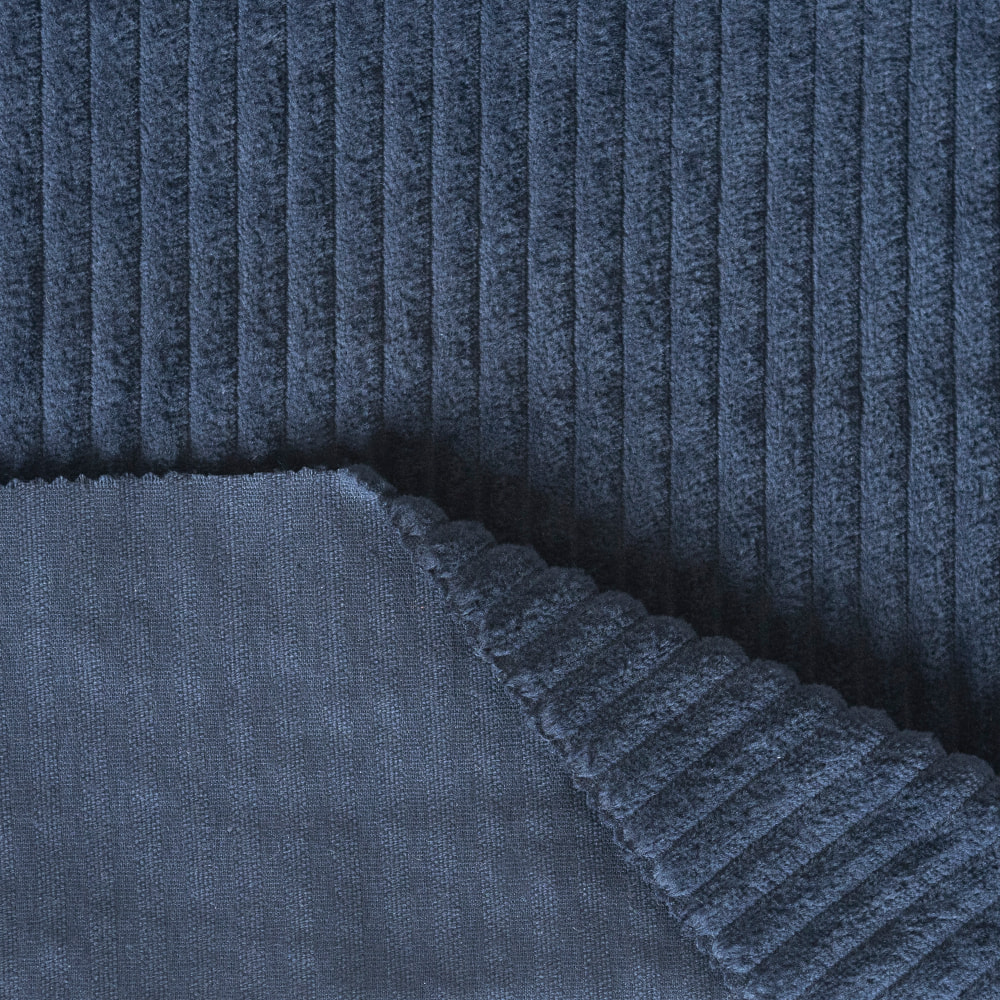


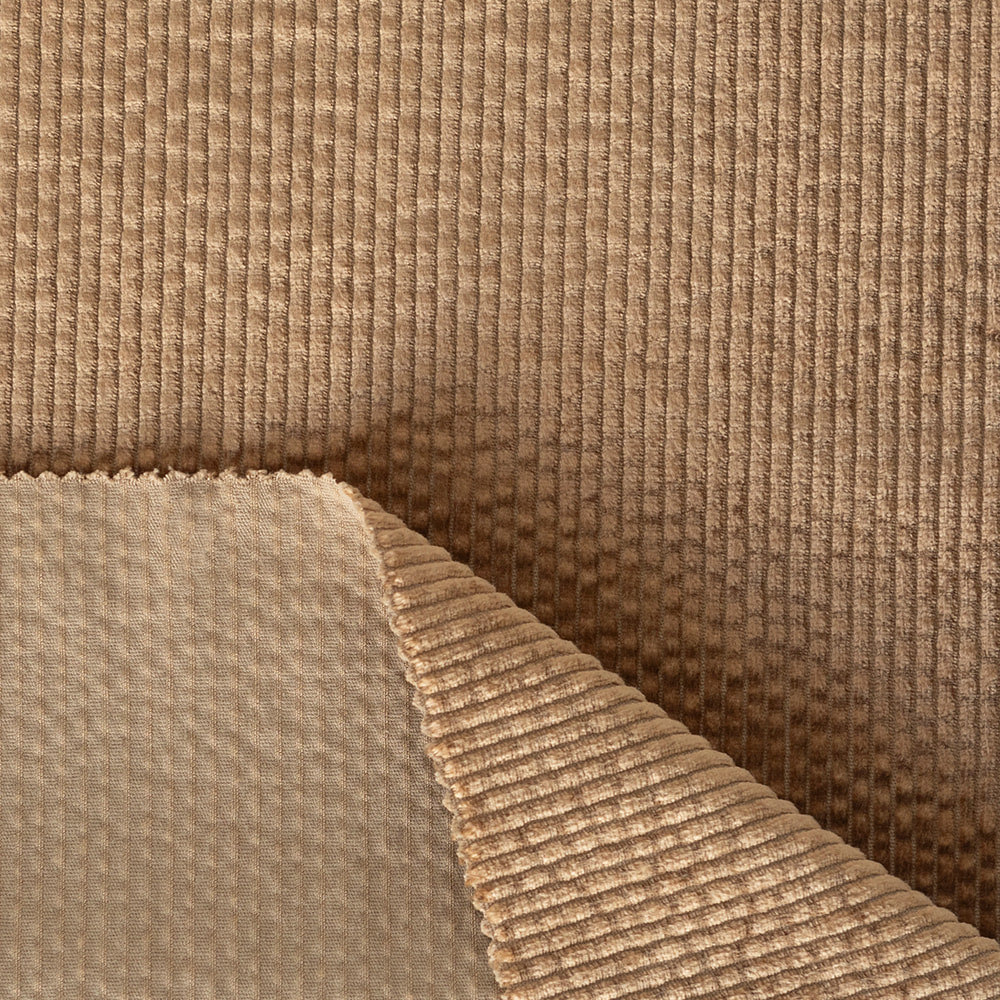
Get Directions
Textile Industry Zone, East Hutang Town, Wujin District,213100 Changzhou,China
In a busy upholstery shop, the request usually arrives with a photo: a mid-century lounge chair, a tired sofa, or a pair of dining seats that deserve a second life. "I want it recovered in corduroy," the customer says. The instinct is to grab the softest fine-wale roll in the rack, but that is exactly how you end up re-doing the job six months later. A 21-wale garment corduroy feels wonderful on a shirt and fails quickly on a seat where someone sits every day. Upholstery needs a different breed of the same fabric.
Here is the bottom line: for most furniture projects, choose a corduroy between 6 wales and 13 wales per inch, confirm the weight, backing, and abrasion resistance, and check whether the weave has stretch before you cut into it. Focus on those four factors and corduroy becomes one of the most durable, comfortable, and visually warm upholstery textiles you can specify.
Content
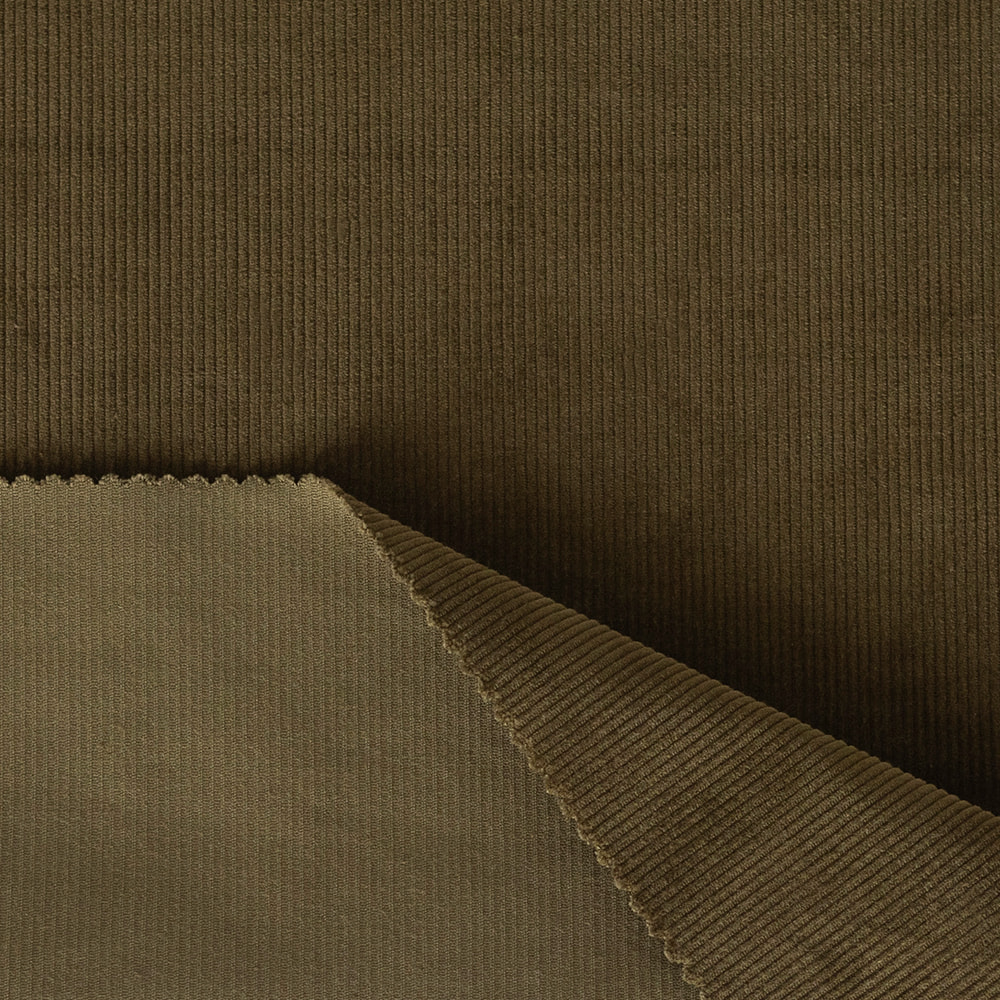
Corduroy is a cut-pile fabric. Tiny tufts of fiber are sheared evenly across the surface, leaving the vertical ribs called wales. On true corduroy the wales run in the warp direction, parallel to the selvedge, and when you fold the fabric the ribs part to show a flat backing underneath. That simple fold test separates genuine corduroy from printed velveteen or brushed twill, a question that comes up in textile forums more often than you would think.
What changes when corduroy moves from clothing to furniture is the construction underneath the pile. An upholstery-grade corduroy must have a denser ground weave, more picks per inch, and a heavier total weight so that daily sitting does not crush the ribs, pull tufts loose, or allow the fabric to stretch out of shape. Garment corduroy is typically built for softness and drape; furniture corduroy is built to hold a curve, resist abrasion, and stay put on a foam cushion.
| Wale count | Rib character | Typical weight | Best upholstery use |
|---|---|---|---|
| 3.5W | Bold, sculptural | Heavy | Club chairs, panels, acoustic screens |
| 6W | Coarse, classic furniture rib | Heavy | Sofas, armchairs, dining seats |
| 8W | Medium rib | Medium-heavy | Headboards, occasional chairs |
| 11W–13W | Medium-fine, tailored | Medium | Curved frames, footstools, recliners |
| 16W–21W | Fine, garment-like | Light-medium | Cushion covers and decorative accents only |
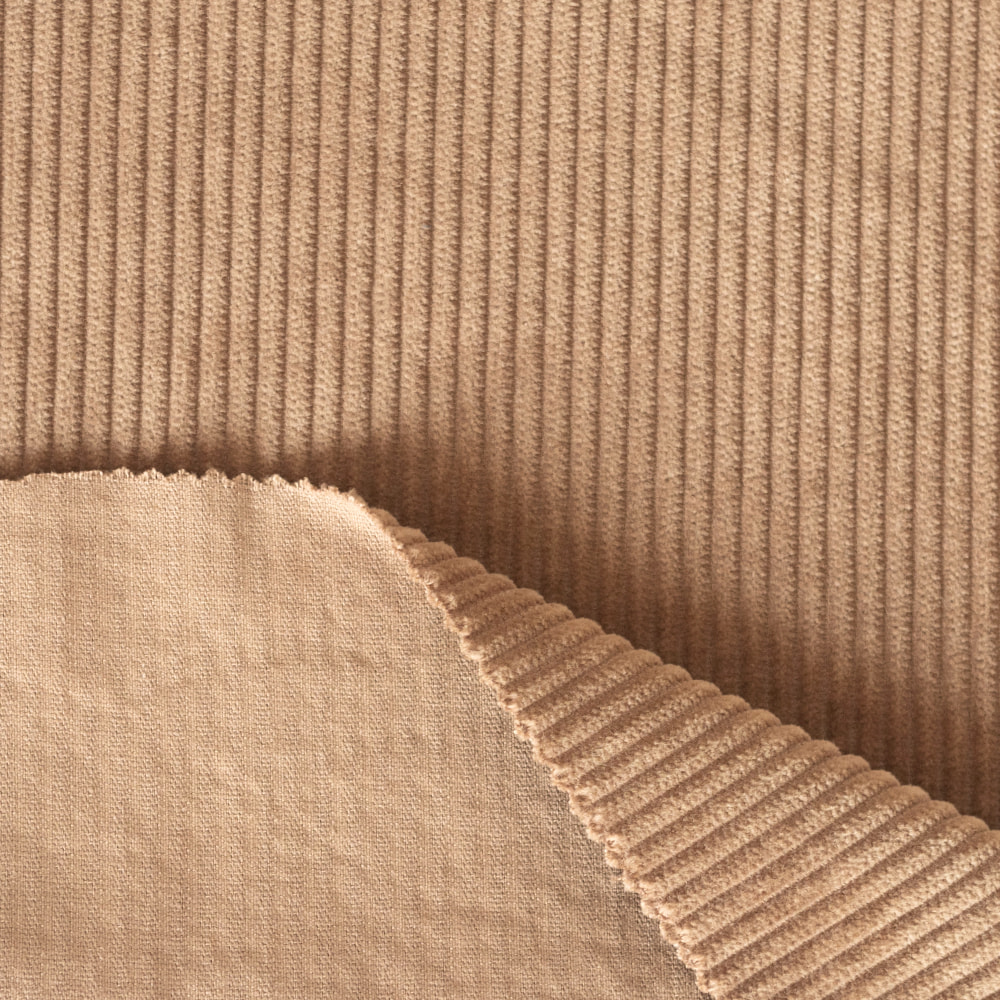
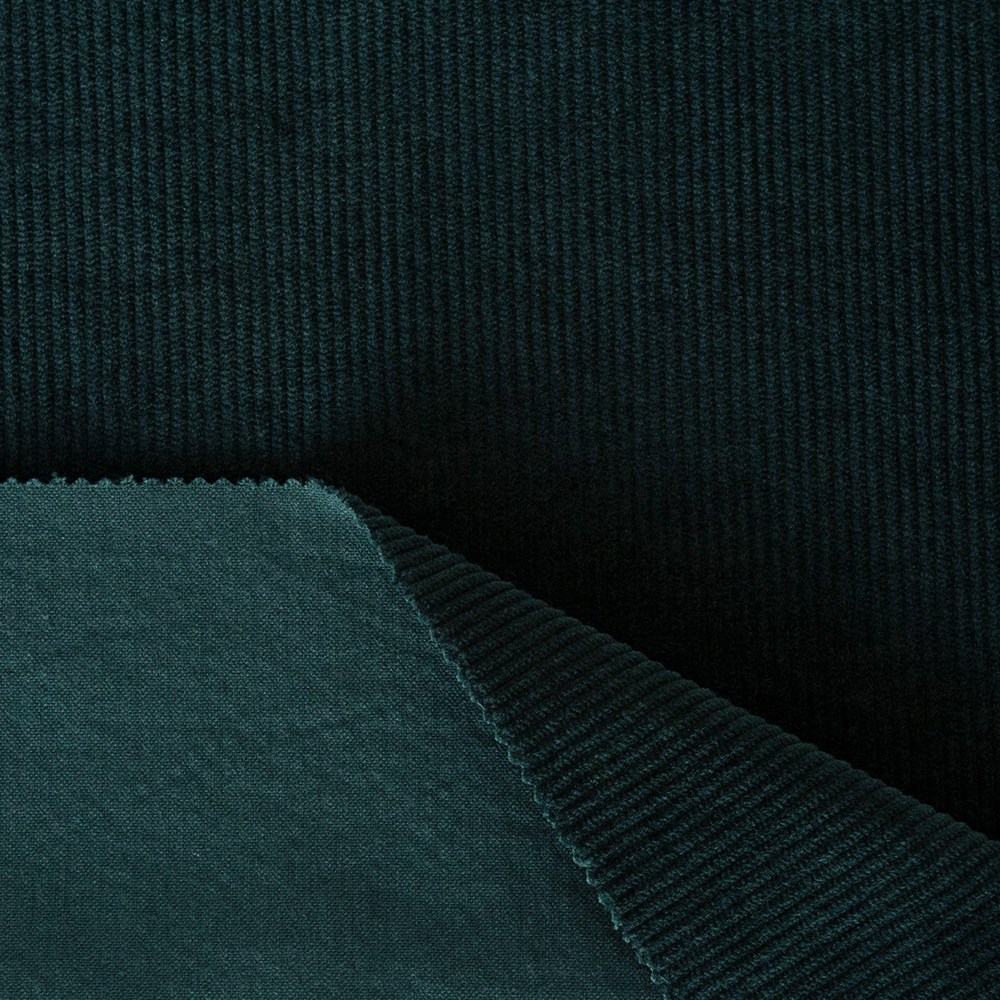
The 6-wale width has been the default for furniture since corduroy first became a sofa fabric. The ribs are coarse enough to read clearly as texture, yet close enough that the surface wears evenly under weight. For that reason, a 6W rough cotton non-stretch construction remains our most-ordered upholstery style.
 6-Wale Rough Cotton Non-Stretch Corduroy Upholstery FabricThe standard 6-wale furniture-weight corduroy in rough cotton, kept in year-round production for sofas, armchairs, and dining seats where clear texture and even wear are required.View Product →
It is woven to furniture weight, and we keep it in production year-round for sofa, armchair, and dining-seat programs.
Once the wale range is right, the buying decision shifts to engineering details. Four factors make or break the finished piece: abrasion, fiber blend, stretch, and dimensional stability.
Seat fabrics are tested for abrasion with a rub test, Wyzenbeek in North America and Martindale in Europe and much of Asia. A residential upholstery fabric should meet at least 15,000 to 20,000 double rubs; a family room or commercial piece should be closer to 30,000 or more. Fine-wale corduroy fails quickly when the pile is loosely woven, so ask the supplier for the rub count and, just as important, the test method. If a mill cannot quote either number, treat the fabric as decorative rather than structural and reconsider it for seating.
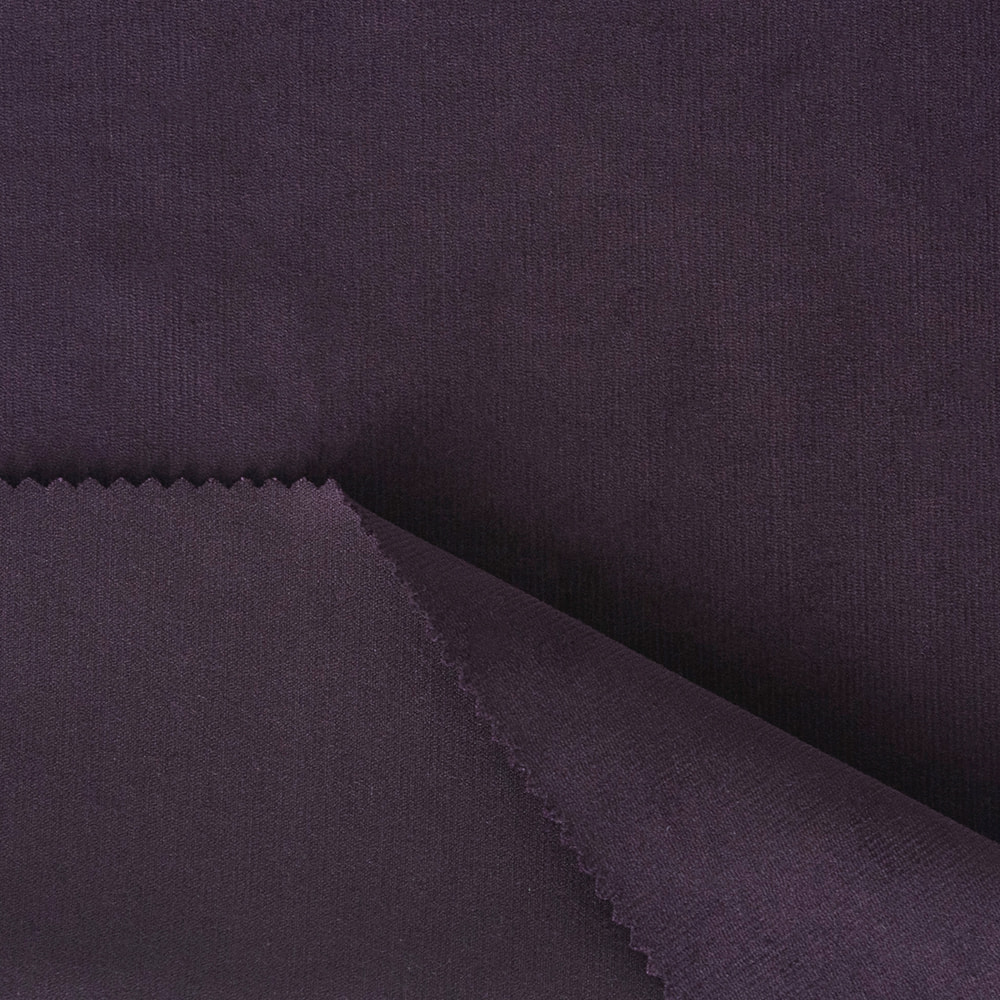
Fiber blend determines how the corduroy behaves after months of use. A 100% cotton corduroy is traditional, looks great, and wears well, but it does not stretch and will not recover from distortions caused by a tight arm cap or a wet cleaning spill. Blends solve specific problems: a polyester–rayon–cotton blend with added spandex wraps curved arms without buckling and returns to shape after repeated sitting; a non-stretch version in the same fiber family holds crisp lines on box cushions. For recliners, motion furniture, or anything with a shaped arm, stretch is not a luxury — it is the difference between a smooth fit and a wrinkled one.
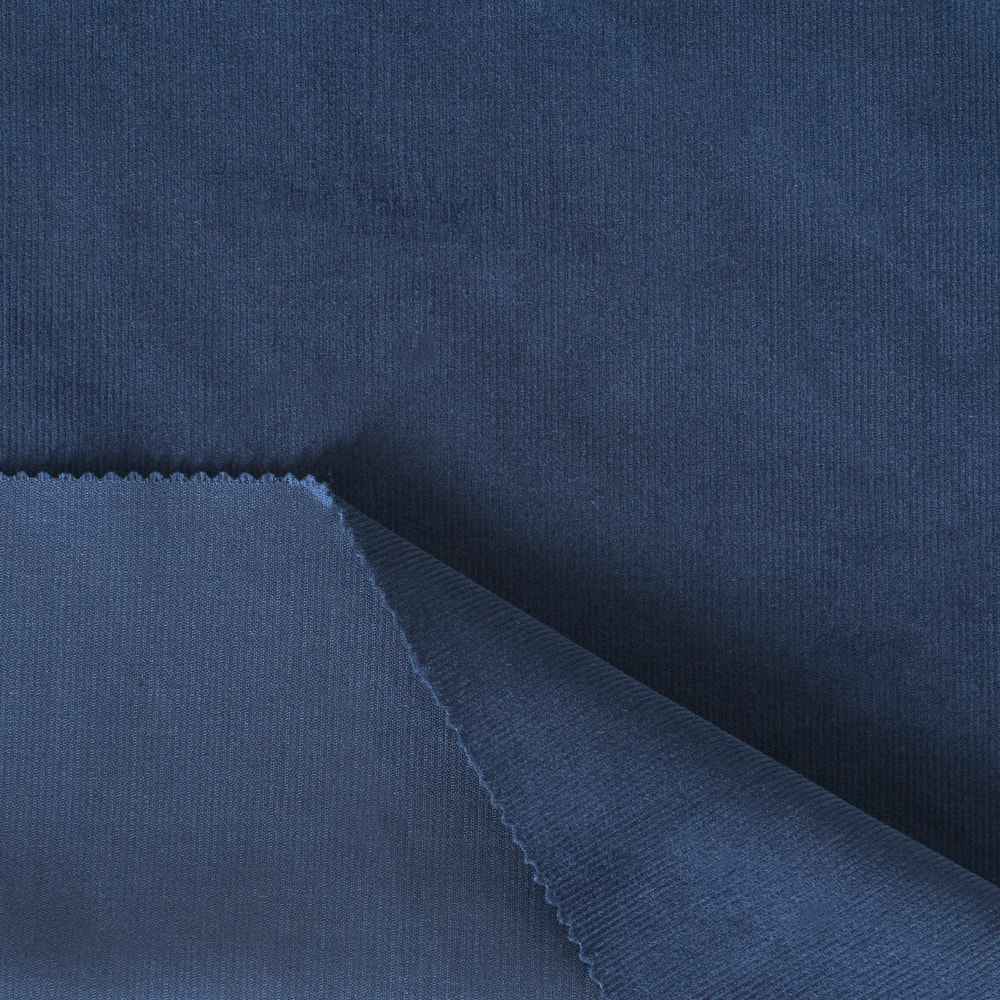
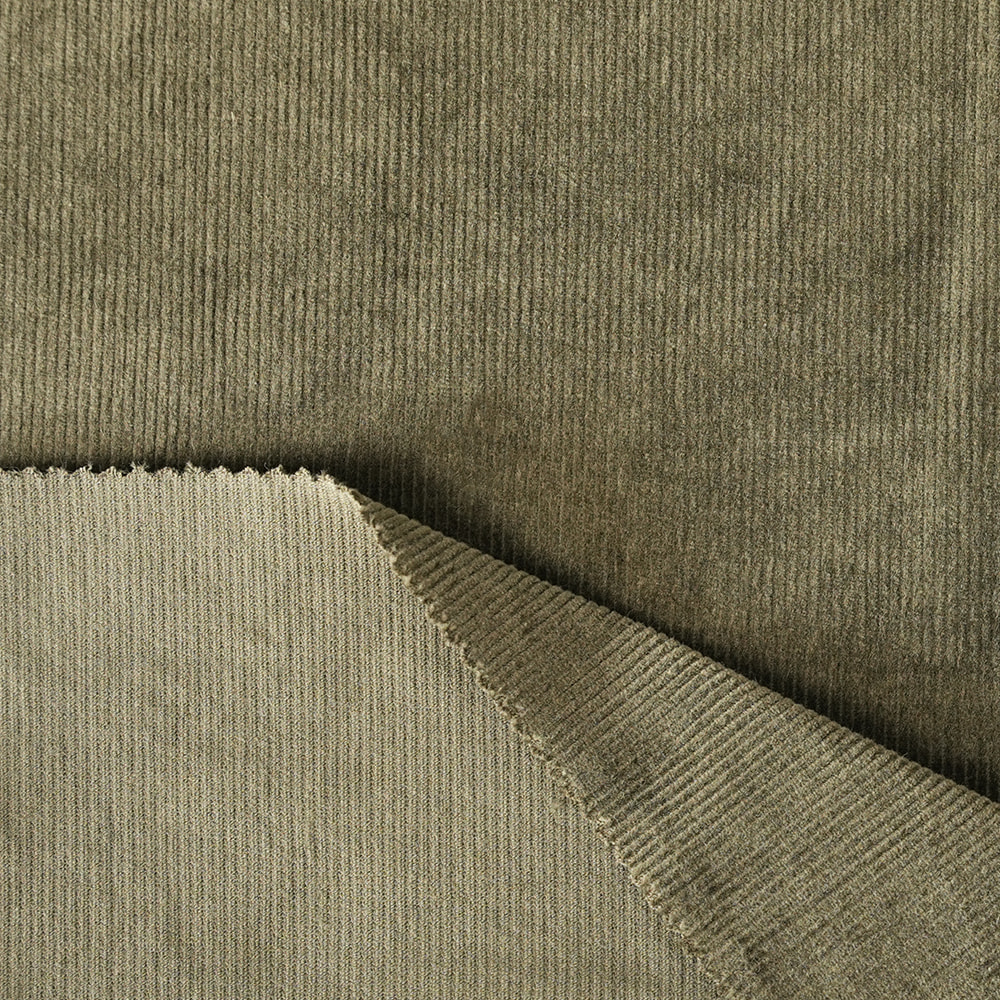
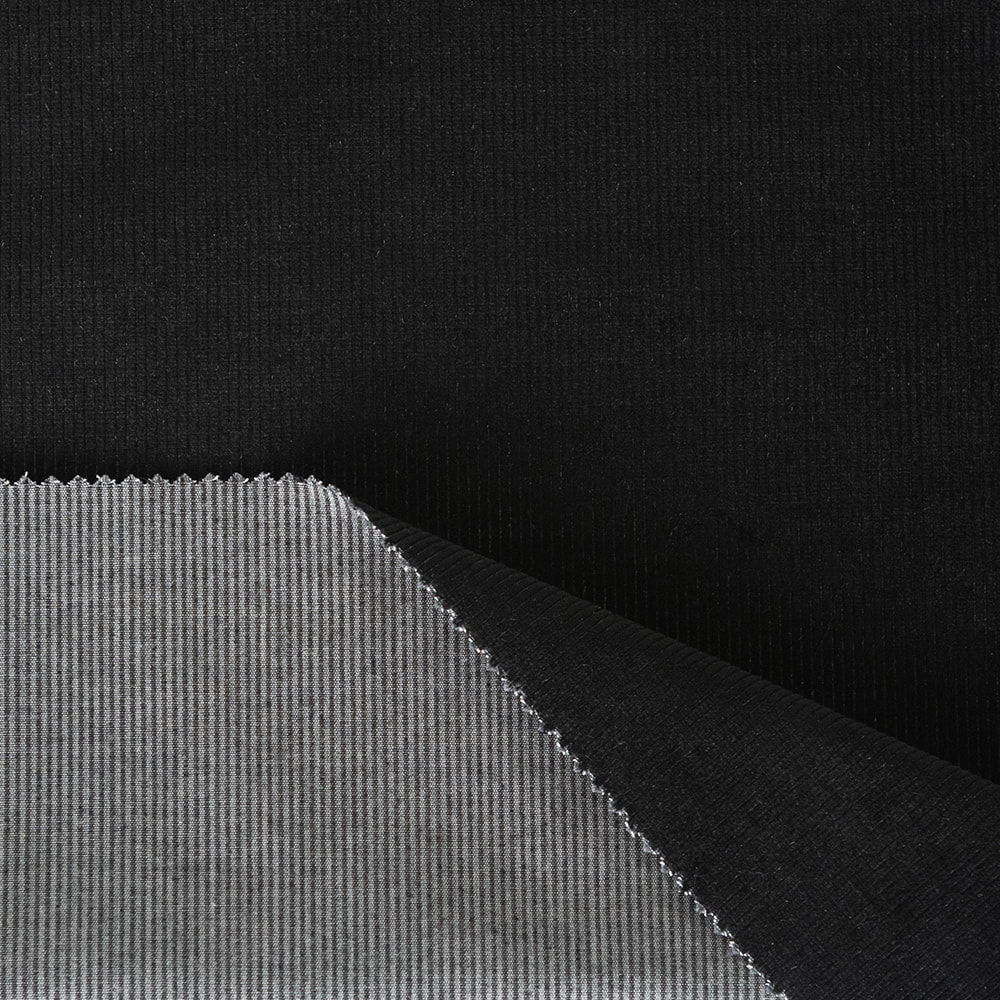 13-Wale Polyester/Rayon/Cotton Stretch Corduroy Upholstery MaterialThis stretch corduroy with spandex follows curved arms and returns to shape after sitting, making it a practical choice for recliners, motion furniture, and shaped upholstery.View Product →
The 13W upholstery material from our polyester–rayon–cotton program sits exactly in that spot: enough stretch to follow compound curves, enough weight to read as furniture fabric, and a smooth enough face to take a tailored cut.
Before committing to full rolls, ask for shrinkage figures after steam relaxation or gentle washing, and confirm that every roll ships from the same dye lot. Corduroy's pile catches light at different angles, so even a half-shade difference between the sofa body and the cushions becomes obvious the first afternoon the sun hits it. A supplier with in-house dyeing and finishing can hold that tolerance; a trader buying from different mills cannot promise it.
The most common mistake is ignoring pile direction. Run a hand across the face: the pile brushes one way. On a seat, arm, or backrest, the pile should run downward, away from the sitter, so it compresses instead of getting scuffed upward. Cut every visible panel with the wales running in the same direction, and never flip a cushion pattern to squeeze out extra yardage — the shading mismatch will be visible from across the room.
Curved arms are where corduroy earns its reputation as a tricky fabric. The ground weave has little give in the warp direction, so pulling a non-stretch medium-weight roll around a tight radius either tears the backing or forms folds at the inside corner. The reliable fix is to start with a fabric that has built-in stretch or, if the design requires a rigid fabric, to cut the corner with a bias welt and relief tucks rather than force the cloth. One workshop rule we repeat often: never wet the fabric to make it round a curve. Water distorts the pile and leaves permanent marks, and the piece will not hold its shape once it dries.
Where the project is a low-traffic piece such as a headboard, a footstool, or the back panels of a built-in banquette, lighter corduroy becomes an option again, and printing adds another layer of design freedom.
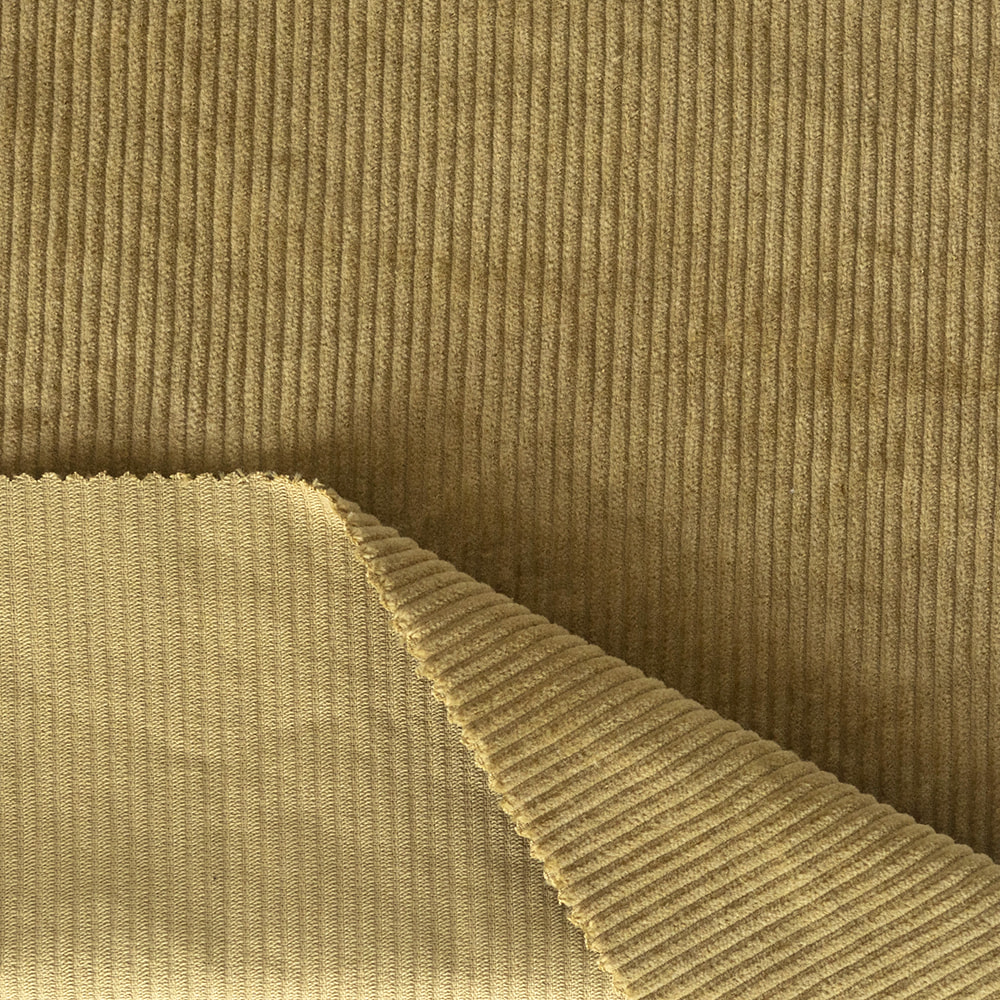
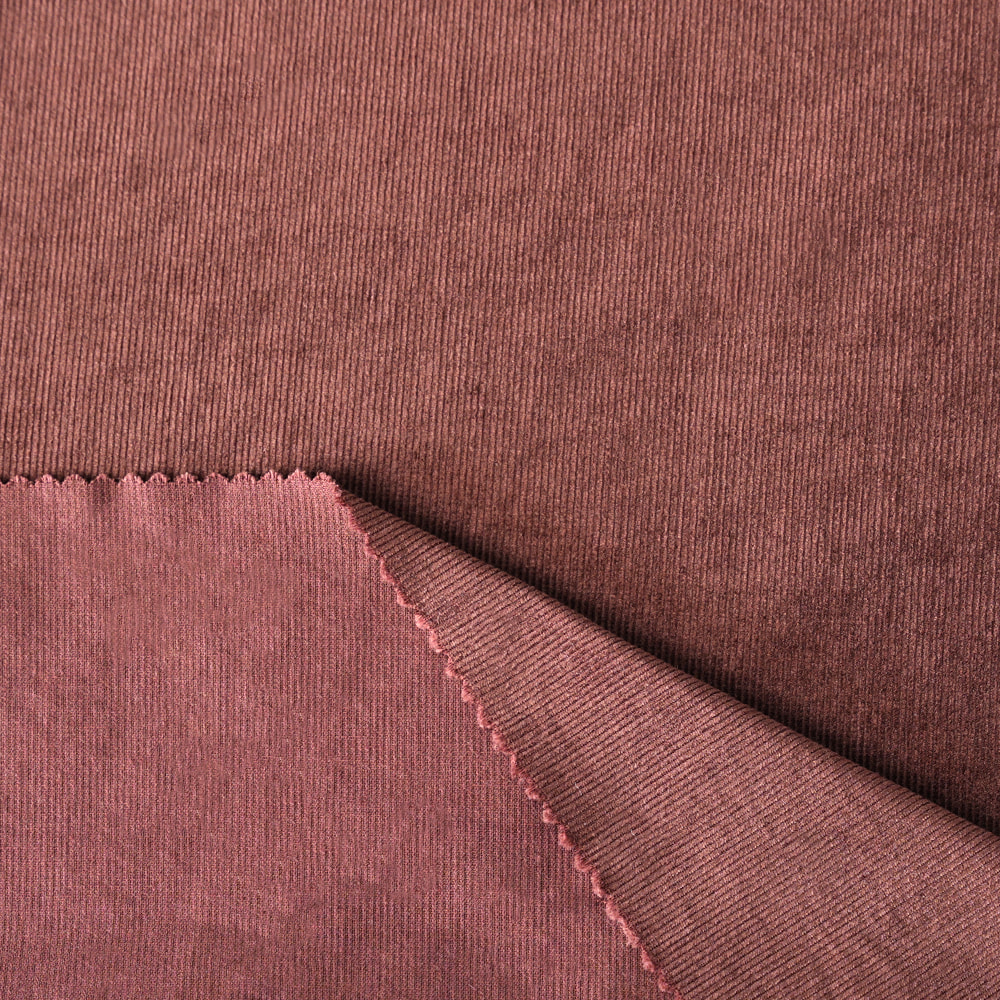
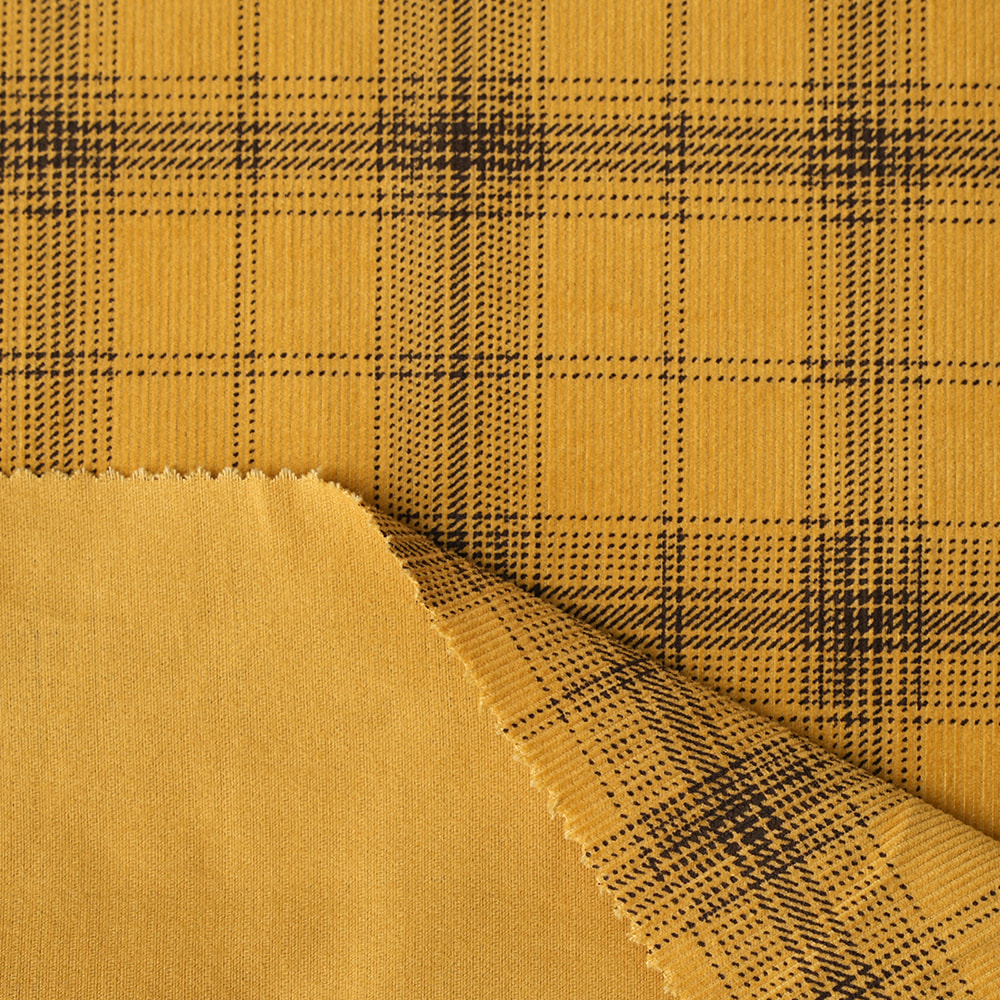 Soft 6-Wale Cotton Corduroy Printed FabricA lighter printed corduroy suitable for low-traffic pieces like headboards, footstools, or banquette backs, offering residential-friendly patterns beyond typical solid colors.View Product →
This soft 6W printed cotton style is a good example: the same cloth that handles a bed panel or an occasional stool, delivered in a pattern range that suits residential interiors instead of the usual solid navy and green.
Consistency is what separates a fabric you can put your name on from a fabric that turns into a phone call six weeks later. The strongest sourcing position is a supplier that controls the whole chain: weaving, pile cutting, dyeing, and finishing. When the same factory that weaves the cloth also matches the color, shade bands tend to stay within tolerance and the finished rolls behave the same from batch to batch. At CLDCLOTH, our operation runs 200 air-jet looms and 20 air-jet jacquard looms, and the technical team develops new wale widths, fiber blends, and finishes against current furniture trends rather than offering the same five stock yarns year after year. You can review the full range on our corduroy fabric manufacturer site.
The sample-yardage review should include, at minimum:
If you need printed corduroy for home decoration, the same discipline applies: verify the base cloth is furniture weight before you are seduced by the pattern. The practical uses of soft 6W printed corduroy in home decoration are a useful reference for how this fabric family behaves on panels, cushions, and wall treatments.
Buy with the seating plan in mind. A high-traffic family sofa wants a 6W cotton or a 13W poly-rayon-cotton stretch; an accent chair can take a lighter 8W; a headboard or footstool can handle a printed fine-wale. Order samples, run the basic tests, and only then cut. Corduroy has covered furniture for over a century because it genuinely works — when you give it the same engineering respect you give the frame underneath it.
Please feel welcome to contact our friendly reception staff with any general call us

+86 139 6116 7127

Email: cloud@jacquardcloth.com

Textile Industry Zone, East Hutang Town, Wujin District,213100 Changzhou,China
