

 English
 日本語
日本語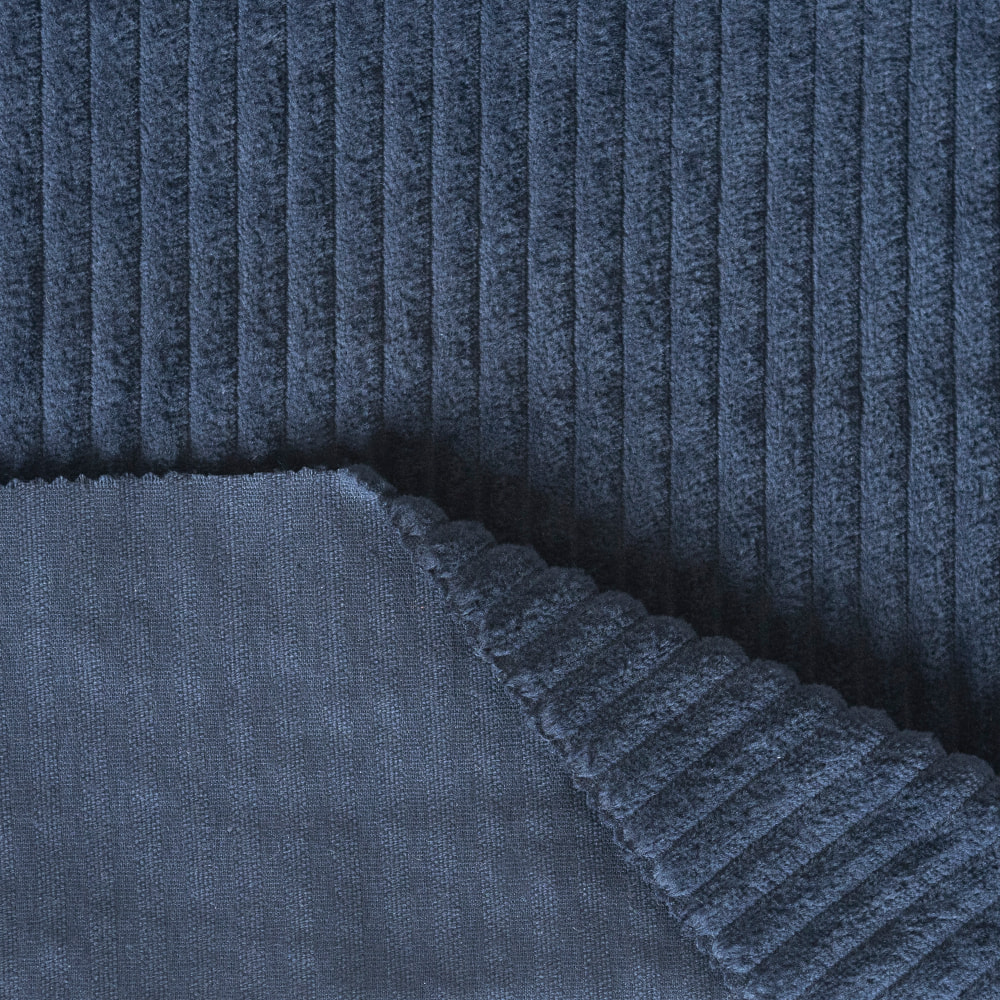


Get Directions
Textile Industry Zone, East Hutang Town, Wujin District,213100 Changzhou,China
Why Yellow Corduroy Is Having a Moment — and Why It's Here to Stay
Yellow and corduroy are a pairing with staying power. Individually, each brings something distinctive to a fabric: yellow carries warmth, optimism, and visual immediacy; corduroy brings tactile depth, structural character, and the kind of textural interest that photographs well and wears even better. Together, they produce a fabric that stands out on the cutting table, on the retail floor, and on the body — and that has made yellow corduroy a consistent presence in seasonal collections from workwear-influenced casualwear to premium interior textiles.
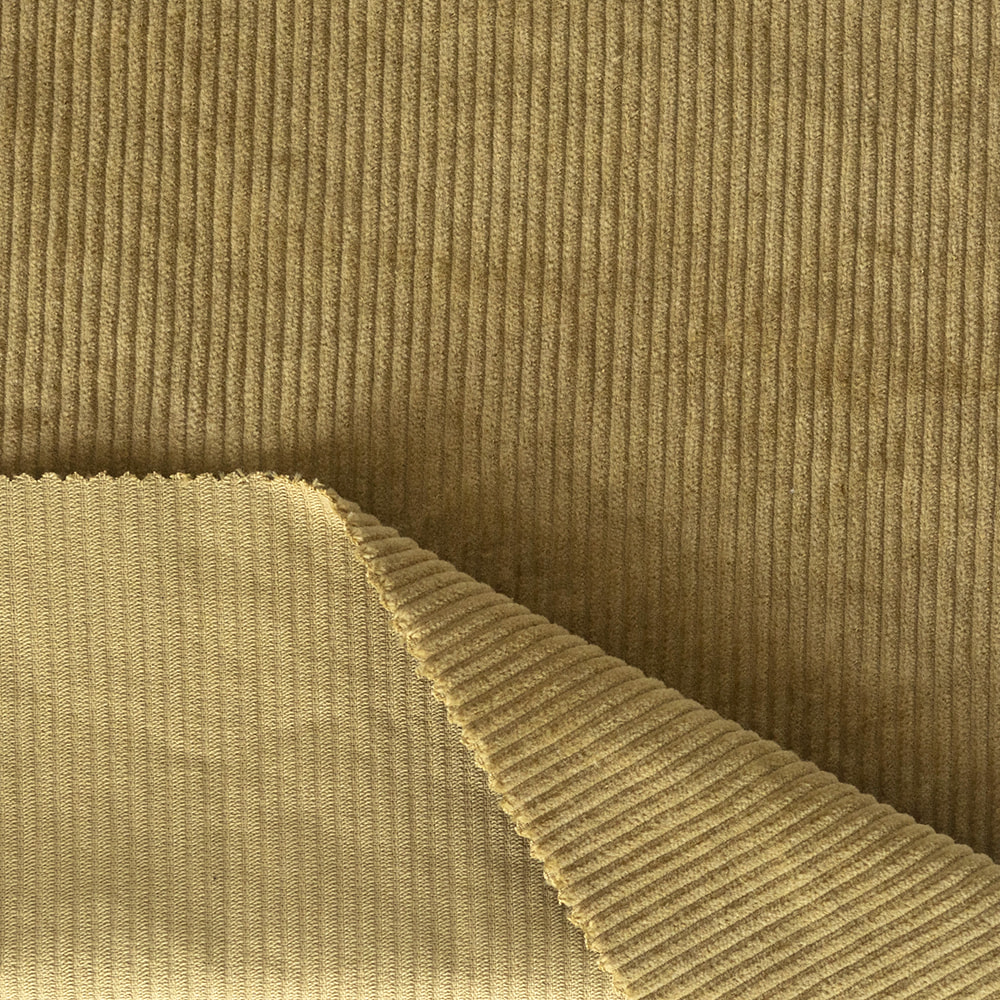
The colour itself spans a wide and versatile range. At the cooler end sits pale buttercup — delicate, almost neutral, suited to fine-wale constructions and lightweight garment applications. In the middle of the spectrum, golden yellow and sunflower tones carry the maximum visual energy of the colour family, working particularly well in wide-wale corduroy where the pile structure creates alternating light and shadow across the ribs. At the deeper end, mustard and ochre shift yellow toward the earth tones, lending themselves to autumn collections, upholstery, and accessories where longevity of appeal matters as much as seasonal impact.
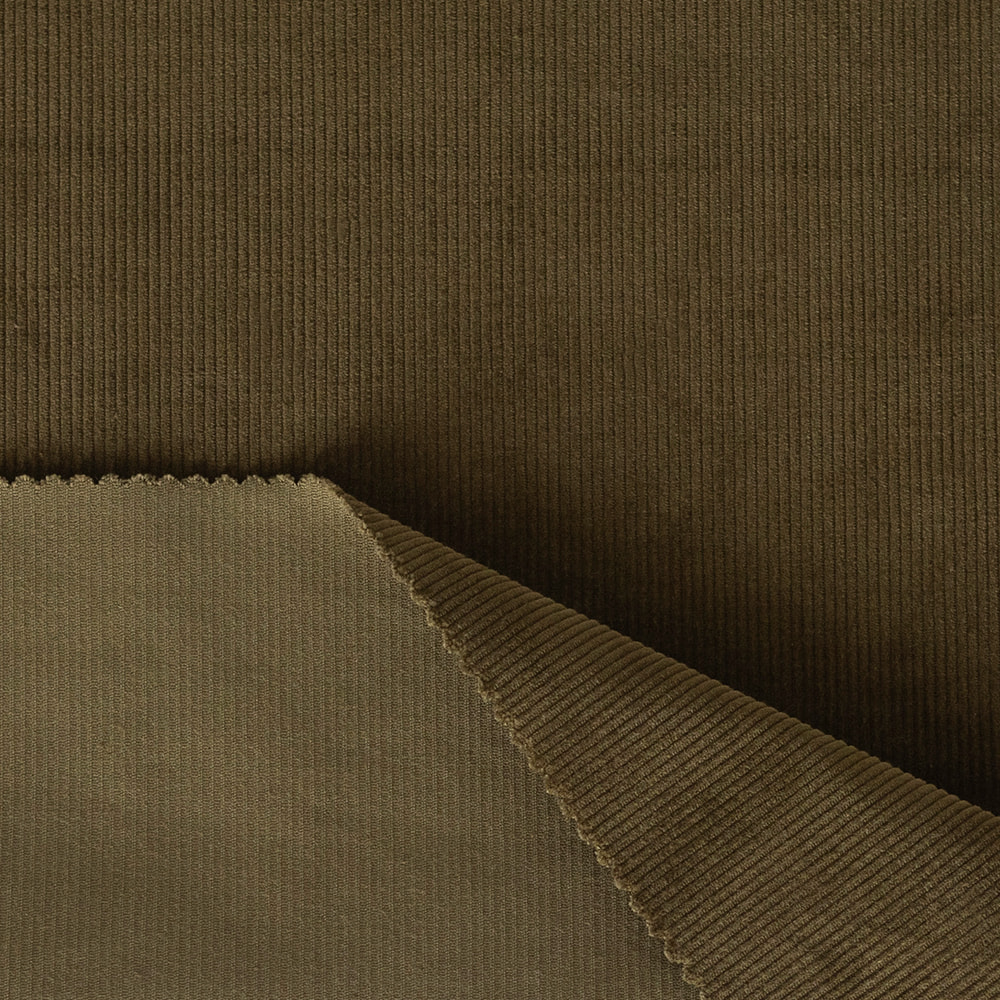
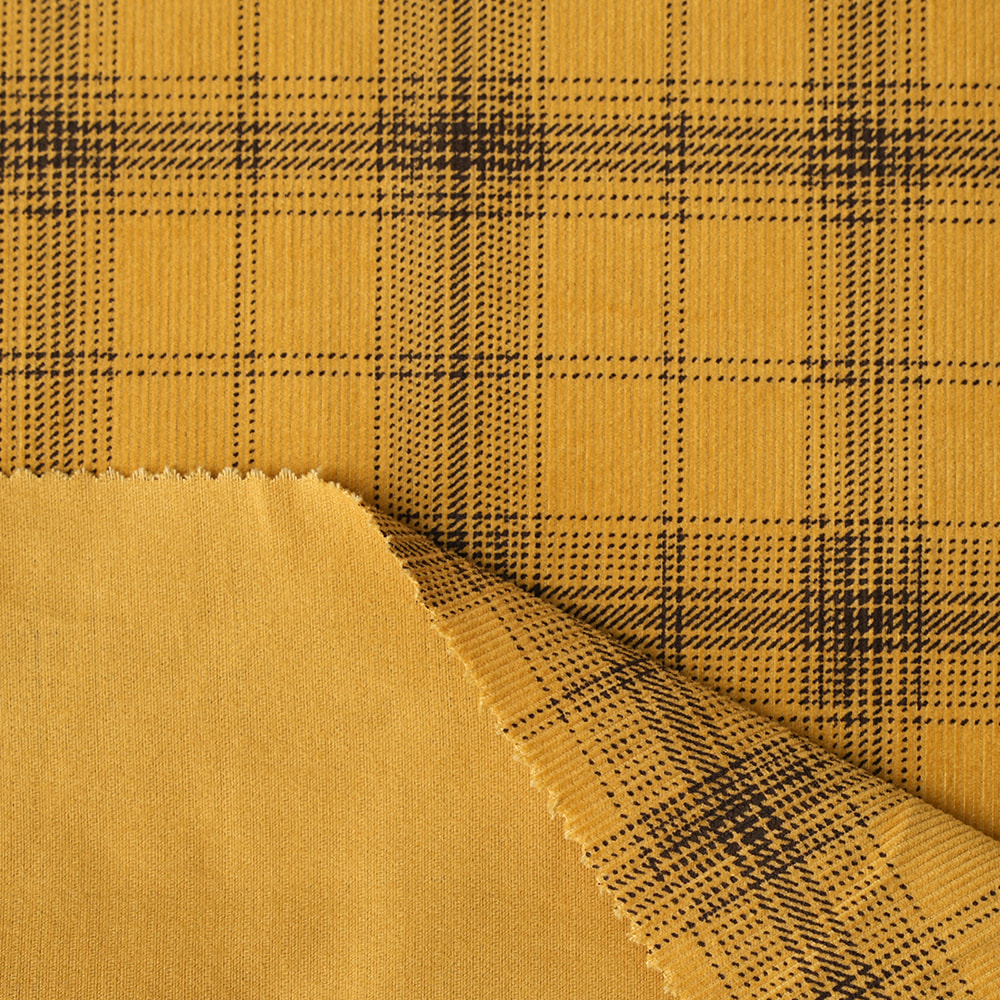
What makes yellow particularly interesting in corduroy specifically — as opposed to a flat-woven fabric — is the way the pile interacts with light. The raised ribs of a corduroy fabric catch light differently depending on viewing angle, giving yellow an inherent dimensionality that flat fabrics cannot replicate. A mustard wide-wale corduroy does not read as a flat, uniform colour; it reads as a surface with depth, with darker valleys between the ribs and brighter crests at the top of each cord. That optical complexity is part of why yellow corduroy has remained a design staple rather than a passing trend.
Content
Wale count — the number of cords or ridges per inch of fabric width — is the primary structural variable in corduroy, and it has a direct bearing on how yellow reads in the finished fabric. Buyers and designers working with yellow corduroy should understand the three main wale categories and what each delivers in terms of colour expression and end-use suitability.
| Wale Category | Wales per Inch | Yellow Colour Effect | Best Applications |
|---|---|---|---|
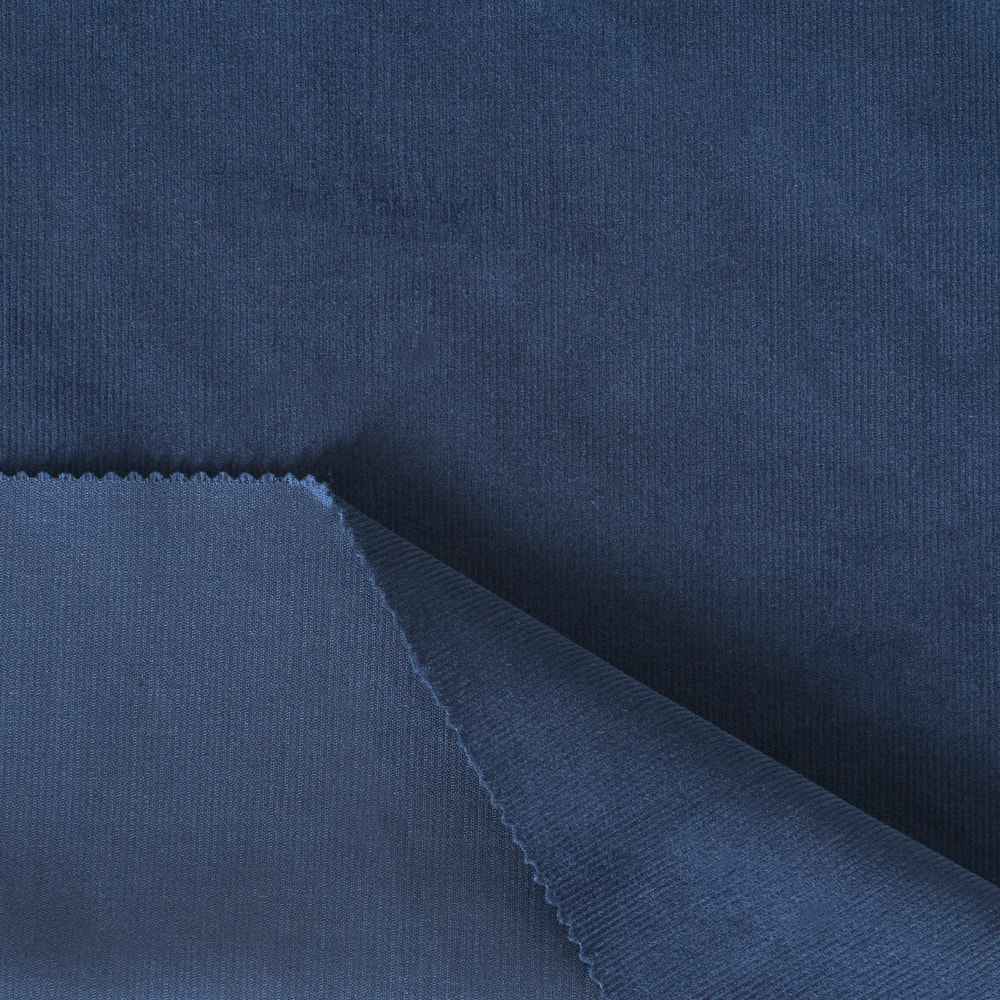
| Pinwale / Baby Wale | 14–21 wales | Smooth, even colour distribution; yellow reads as clean and consistent | Children's wear, shirts, dresses, fine accessories |
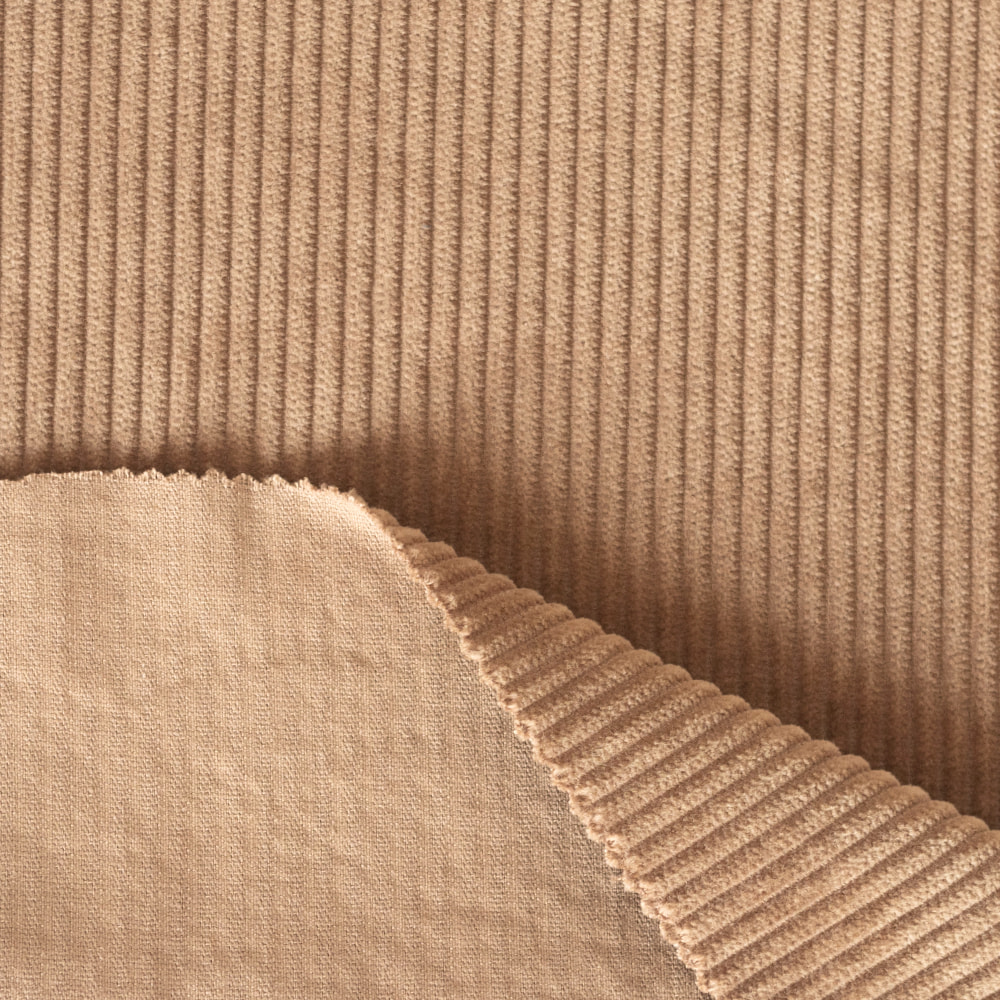
| Standard / Mid Wale | 8–12 wales | Balanced texture and colour depth; visible rib adds dimension without dominating | Trousers, jackets, skirts, casual outerwear |
| Wide Wale / Jumbo Cord | 3–6 wales | Strong light-and-shadow contrast; yellow appears richer and more saturated | Statement outerwear, upholstery, bags, home textiles |
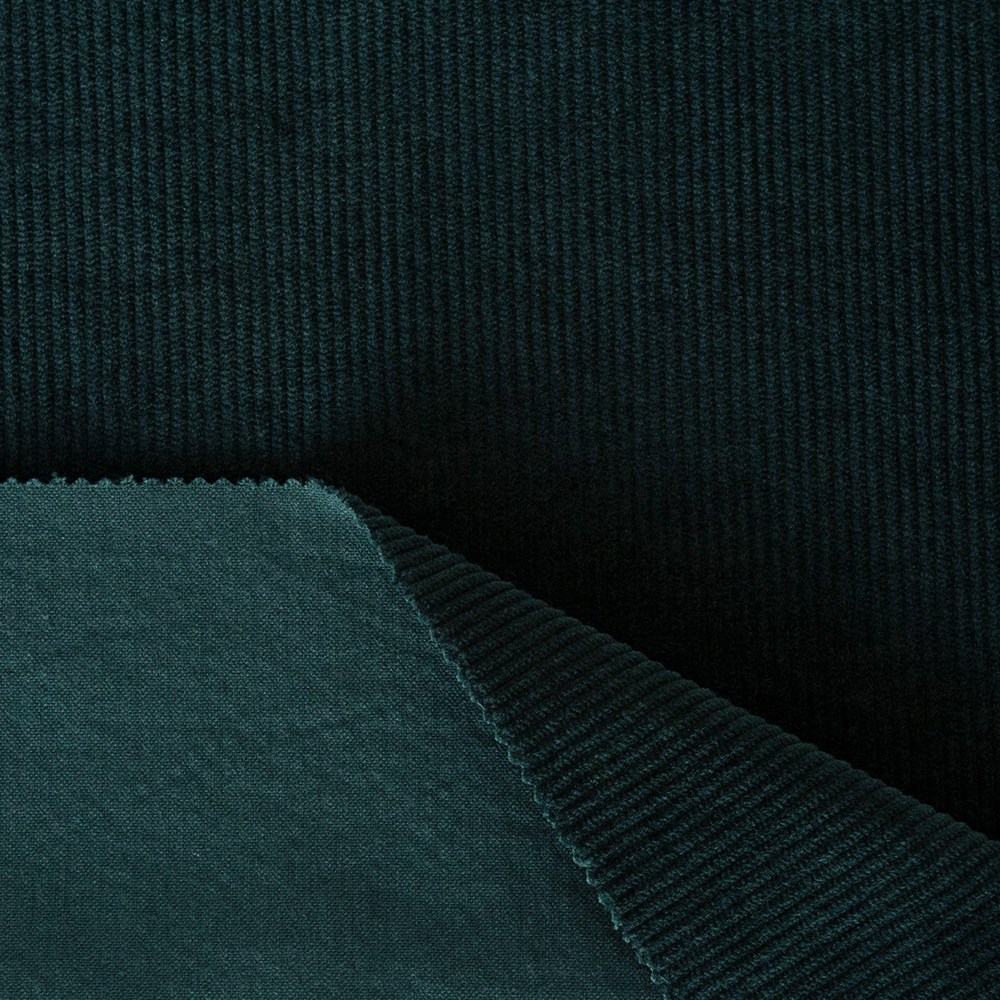
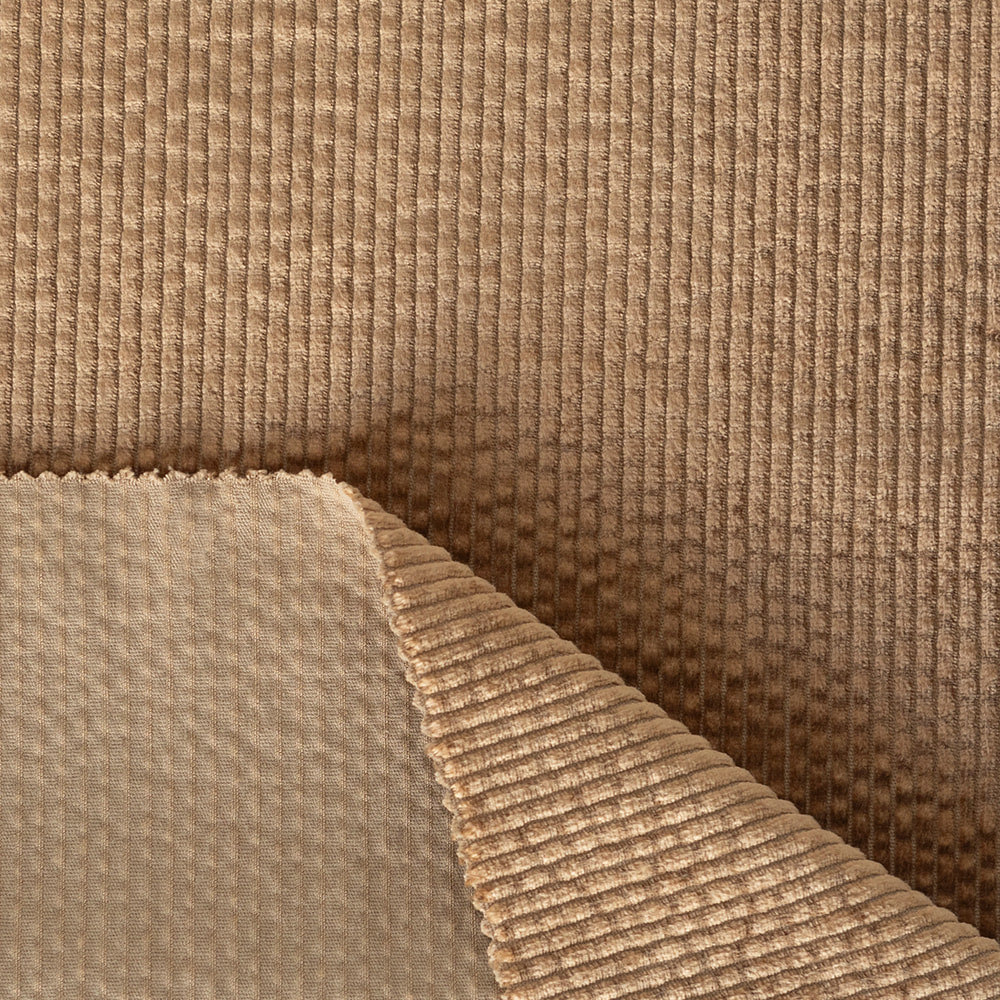
Pinwale corduroy in yellow behaves almost like a solid-colour woven fabric at a distance — the fine rib structure is subtle enough that the eye reads the overall hue rather than the individual cords. This makes it the most versatile wale category for yellow across garment applications, particularly in lighter shades like buttercup or pale gold where a heavier rib might feel visually overwhelming. Mid-wale corduroy is the workhorse specification: enough texture to communicate the material's character, enough colour surface area for yellow to register clearly. Wide-wale corduroy in yellow makes a deliberate statement. The deep ribs create a dramatic interplay of light and shadow that amplifies the colour's warmth — at its best in mustard and deep golden tones for autumn outerwear or statement home furnishing pieces.
How a yellow corduroy fabric is dyed has as much influence on its commercial value as the wale count or fibre content. For buyers sourcing at volume, understanding the difference between the two principal dyeing approaches — and when each is appropriate — is essential to specifying correctly and avoiding costly inconsistencies in production.
In piece dyeing, the corduroy fabric is woven first as a greige (undyed) cloth and then dyed as a whole piece after construction. For yellow specifically, piece dyeing delivers the highest level of batch-to-batch colour consistency — the dye penetrates the finished fabric uniformly across warp, weft, and pile, producing a clean, even hue across the full width of every meter in a production run. This consistency makes piece-dyed yellow corduroy the standard specification for large-volume commercial orders where colour matching across multiple production batches is a quality requirement. Cotton piece-dyed corduroy fabric for consistent colour across large orders is the foundational option in this category, offering the combination of natural fibre performance and reliable colour reproduction that most garment and home textile applications require.
In yarn dyeing, the individual yarns are dyed before the fabric is woven. Because the colour is locked into the fibre at the yarn stage rather than applied to the finished cloth, yarn-dyed corduroy offers superior colourfastness — particularly important for yellows, which can be prone to fading under UV exposure and repeated laundering more than deeper tones. Yarn dyeing also introduces a subtle visual complexity that piece dyeing cannot replicate: because warp and weft yarns can be dyed to slightly different shades, the finished fabric has an inherent tonal depth that makes the colour appear richer and more considered. For premium garment lines, workwear, and any application where longevity of colour is a priority, yarn-dyed corduroy fabric with superior colour depth and fastness is the appropriate specification.
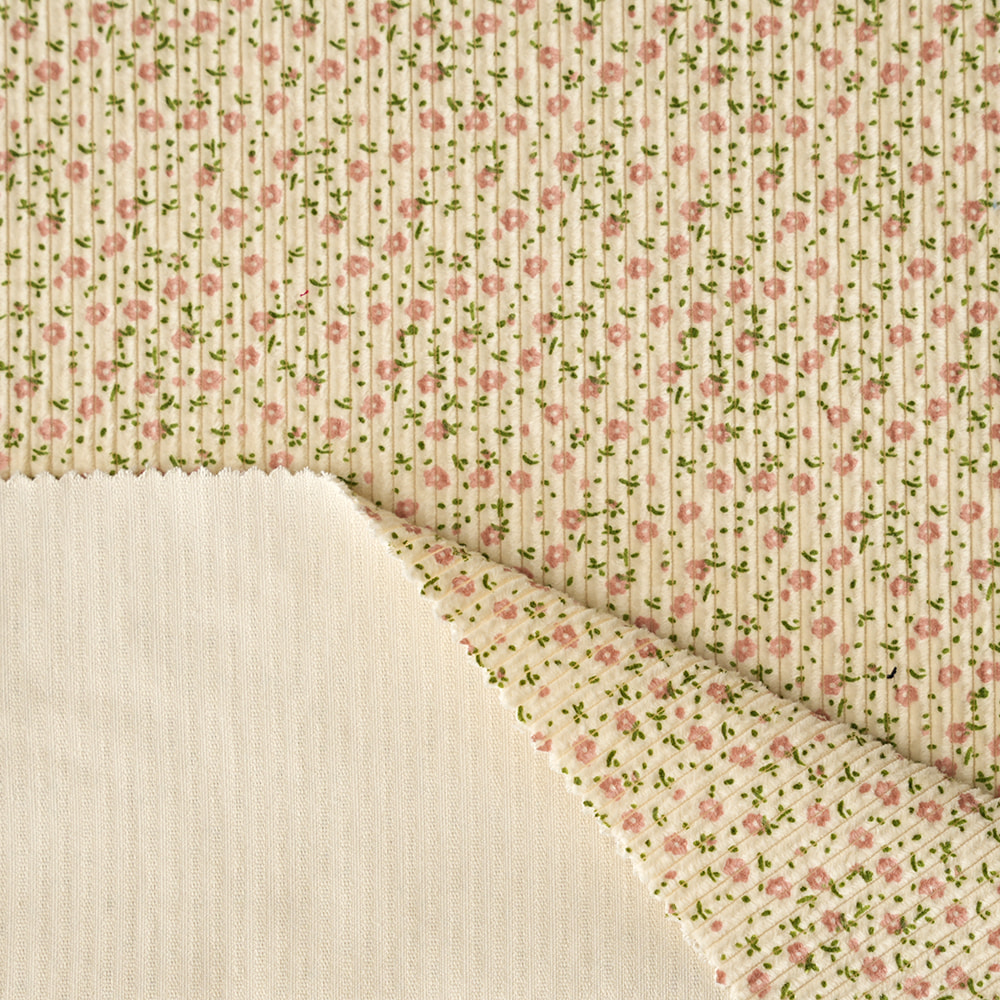
For applications where yellow is one element within a multi-colour design — floral prints, geometric patterns, conversational prints — printing corduroy fabric for patterned and custom colour designs offers a third route. Printed corduroy allows yellow to function as a background, an accent, or a dominant colour within a complex design that solid dyeing cannot achieve. The challenge with printing on corduroy is pile direction management — the raised rib structure means that ink penetration and surface coverage vary depending on how the print is applied relative to the pile direction, requiring printing processes specifically calibrated for structured pile fabrics.
The fibre content of a yellow corduroy fabric determines not only its physical performance — stretch, drape, weight, breathability — but also how the yellow dye expresses itself on the finished surface. Different fibres have different dye affinities, light reflectance properties, and surface textures that modify the visual and tactile character of the colour.
Cotton is the traditional corduroy fibre, and for yellow it delivers a clean, matte finish that reads as warm and natural. Cotton's low reflectance means yellow in a cotton corduroy appears grounded and earthy rather than bright or synthetic — ideal for mustard and ochre tones in heritage-influenced collections. Its breathability and natural fibre profile make it the standard specification for most apparel and home textile applications.
Adding spandex (typically 2–5%) to a cotton corduroy base delivers stretch and recovery without significantly altering the colour character of the yellow. The practical benefit is significant for fitted garment applications — trousers, fitted jackets, structured dresses — where movement comfort and shape retention are as important as aesthetics. Cotton-spandex stretch corduroy for garments requiring movement and recovery is the most widely specified blend in contemporary apparel corduroy.
Tencel (lyocell from eucalyptus pulp) blended with cotton produces a corduroy with a noticeably different surface character — smoother, with a subtle sheen that makes yellow appear slightly brighter and more luminous than in pure cotton. The fibre's natural lustre elevates the colour without tipping it into synthetic-looking territory. Tencel-cotton corduroy combining softness and sustainable fibre credentials is increasingly specified for premium garment lines where environmental profile matters alongside performance.
Modal fibres have an exceptionally smooth surface and strong dye affinity, which means yellow in a modal-cotton corduroy tends to appear particularly rich and even — with a soft, almost silky hand feel that distinguishes it clearly from standard cotton. The drape is also noticeably improved compared to pure cotton, making modal-cotton corduroy well-suited to fluid garment constructions. Modal-cotton corduroy for premium drape and next-to-skin softness is the appropriate specification for direct-contact garments where hand feel is a priority.
Rayon (viscose) blended with cotton produces a lightweight corduroy with good drape and a slightly more fluid behaviour than pure cotton. Yellow in a rayon-cotton blend reads similarly to cotton but with marginally more brightness due to rayon's slightly higher reflectance. The reduced weight makes this blend suitable for transitional-season garments and lightweight home textile applications. Rayon-cotton corduroy for lightweight and fluid garment constructions covers this specification.
Polyester added to cotton increases durability, reduces shrinkage, and lowers fabric cost — making polyester-cotton corduroy the preferred specification for applications where budget efficiency and washability are the primary constraints. Yellow in a polyester-cotton blend tends to read slightly brighter than in pure cotton due to polyester's higher reflectance, which can work in favour of lighter, more vibrant yellow shades. Polyester-cotton corduroy for durability and cost-efficient production is the standard specification for workwear, bags, accessories, and high-volume commercial applications.
Translating the wale and fibre variables into application-specific recommendations simplifies the sourcing decision considerably. The matrix below covers the most common end-use categories for yellow corduroy fabric.
| Application | Recommended Wale | Recommended Fibre | Yellow Shade Guidance |
|---|---|---|---|
| Trousers and fitted bottoms | 8–14 wales | Cotton/spandex | Mid-tone gold or mustard for versatility |
| Jackets and outerwear | 6–12 wales | Cotton or polyester/cotton | Deeper mustard or ochre for seasonal depth |
| Dresses and skirts | 14–21 wales | Modal/cotton or Tencel/cotton | Buttercup or pale gold for lightness |
| Children's wear | 16–21 wales | Cotton or cotton/spandex | Bright sunflower or buttercup |
| Upholstery and home textiles | 3–6 wales | Cotton or polyester/cotton | Mustard or deep gold for durability of appeal |
| Bags and accessories | 6–14 wales | Polyester/cotton | Any shade; consider colorfastness priority |
| Statement fashion pieces | 3–8 wales | Tencel/cotton or Modal/cotton | Sunflower or warm gold for maximum impact |
For applications requiring additional surface interest beyond solid yellow, jacquard dobby corduroy for textured and pattern-woven surface effects introduces geometric or tonal pattern structure within the yellow colour field — particularly effective for premium accessories and decorative home textiles. Where four-way stretch is required for performance or fitted garment applications, bi-stretch corduroy fabric for fitted and performance-oriented designs delivers movement in both warp and weft directions without compromising the corduroy's surface character.
Yellow is among the more technically demanding colours to manage consistently in corduroy production. Unlike navy or black — which are forgiving of minor dye lot variation — yellow is highly sensitive: a slight shift in pH during the dyeing process, a difference in fibre batch absorbency, or a variation in fixation time can produce a measurable difference in the finished shade that is visible under natural light. Buyers placing volume orders for yellow corduroy should confirm the following parameters with their supplier before committing to a production run.
Colour fastness standards. For yellows specifically, colourfastness to washing (ISO 105-C06), light (ISO 105-B02), and rubbing (ISO 105-X12) should all be confirmed. Minimum acceptable ratings vary by end use: garment applications typically require grade 3–4 across all tests; upholstery and home textiles may require grade 4–5 for light fastness given their extended sun exposure.
Lab dip approval process. Before bulk production begins, request a lab dip — a small-scale dye sample produced from the actual fibre batch to be used in production. Approve the lab dip under standardised D65 lighting conditions (the industry standard for daylight simulation) and specify the acceptable colour tolerance in ΔE values. For yellow, a ΔE of 1.0 or below is a reasonable commercial standard; tighter tolerances may be appropriate for premium products.
Batch consistency and re-order management. If the programme requires multiple production batches across a season, confirm whether the supplier can guarantee shade consistency across batches, or whether shade banding protocols are in place. For yellow, even minor batch variation can be visible when garments or panels from different dye lots are placed adjacent to one another.
Fabric width and weight. Confirm finished fabric width (typically 57–60 inches for apparel corduroy), weight in grams per square metre, and wale count per inch against the agreed specification. These parameters affect yield calculations, and variation outside agreed tolerances increases material waste and production cost.
Yellow corduroy fabric rewards precise specification. Buyers who define their requirements clearly — wale count, fibre blend, dyeing method, colour standard, and quality thresholds — consistently receive product that performs as intended across the full production run and through the end use lifecycle.
Please feel welcome to contact our friendly reception staff with any general call us

+86 139 6116 7127

Email: cloud@jacquardcloth.com

Textile Industry Zone, East Hutang Town, Wujin District,213100 Changzhou,China
