

 English
 日本語



Get Directions
Textile Industry Zone, East Hutang Town, Wujin District,213100 Changzhou,China
A buyer approves a 12-wale stretch corduroy jacket for a winter collection. The sample feels soft, the color is rich, and the label says “machine wash cold, tumble dry low.” Three months later, consumers report shrinkage at the seams and flattened pile after the first wash. The fabric passed a hand-feel review, but the care labeling rule was treated as a tag detail instead of a product claim.
The care labeling rule is not a finishing step for the art department. It is the point where fiber content, construction, dyeing, finishing, and expected consumer behavior become one written promise. In the United States, the FTC Care Labeling Rule, 16 CFR Part 423, requires covered manufacturers and importers to provide care instructions for clothing. The label must be attached, legible, and accurate for the useful life of the garment. Fiber content and country of origin may fall under separate labeling requirements, but buyers usually review them together because a missing or inaccurate label can stop a shipment.
The practical conclusion is simple: approve the care route before bulk, not after. A label that says “cold wash” does not fix a fabric that shrinks in cold water, and “dry clean only” is not a substitute for testing a corduroy that should be washable.
Content
The rule asks for appropriate care information, not marketing language. A usable care label should tell the consumer what to do and what to avoid. For most apparel programs, that means washing, bleaching, drying, ironing, and any relevant warning. Professional cleaning may also be addressed when the fabric or trim requires it. The instruction must be based on ordinary use, so the label should reflect the way consumers actually wash, dry, and iron clothing, not a laboratory process that cannot be repeated at home.
For corduroy, the label has to account for pile, wales, blends, and stretch. A cotton corduroy trouser and a viscose-cotton corduroy dress may share a wale count but behave differently in water, heat, and drying. That is why a care labeling rule review should begin with the fabric specification and finish route.
| Label claim | What to verify | Common risk |
|---|---|---|
| Machine wash cold | Shrinkage, color transfer, and pile appearance after repeated home laundering at the stated temperature | A cool label cannot rescue a fabric that mats or distorts in cold water |
| Tumble dry low | Dimensional change, seam distortion, hand feel, and pile recovery after the stated dryer cycle | Air-dry assumptions may not match consumer behavior |
| Do not bleach | Colorfastness and fiber damage when a consumer uses a bleach-containing detergent | Wording must distinguish chlorine from oxygen bleach if that matters |
| Warm iron | Pile flattening, glazing, and heat sensitivity, especially with elastane or synthetic blends | A temperature that works on cotton may mark a blend |
| Professional dry clean | Solvent compatibility, finish stability, and whether the instruction is truly necessary | Overusing dry clean only raises cost and reduces consumer appeal |
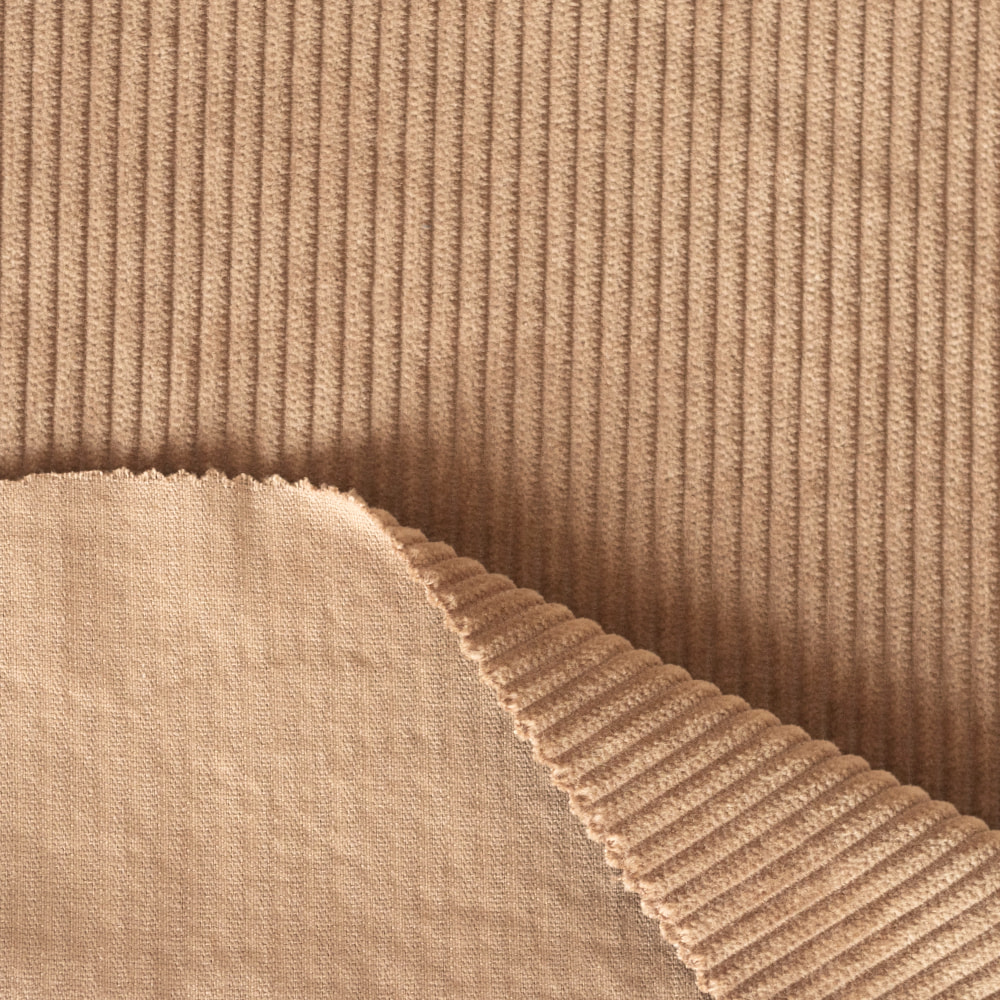
Corduroy is a woven pile fabric. The cut pile gives it warmth and texture, but that same pile can flatten, glaze, or show abrasion after improper drying. Elastane improves comfort and recovery, yet heat can reduce stretch performance. Viscose, modal, and tencel blends may improve drape, but they can also change shrinkage and wet strength. A care labeling rule review that looks only at fiber percentage misses the effect of wale density, weft stretch, dye method, and finishing.
A 12-wale stretch knit corduroy used for dresses, shirts, and pants may need a gentler route than a heavy nonstretch cotton corduroy for upholstery or outerwear. The label should match the actual product, not the mill’s broad fabric family. For example, stretch apparel fabrics often need clear guidance on low heat and reshaping after washing, while soft cotton baby corduroy needs attention to shrinkage, seam comfort, and colorfastness after repeated laundering.
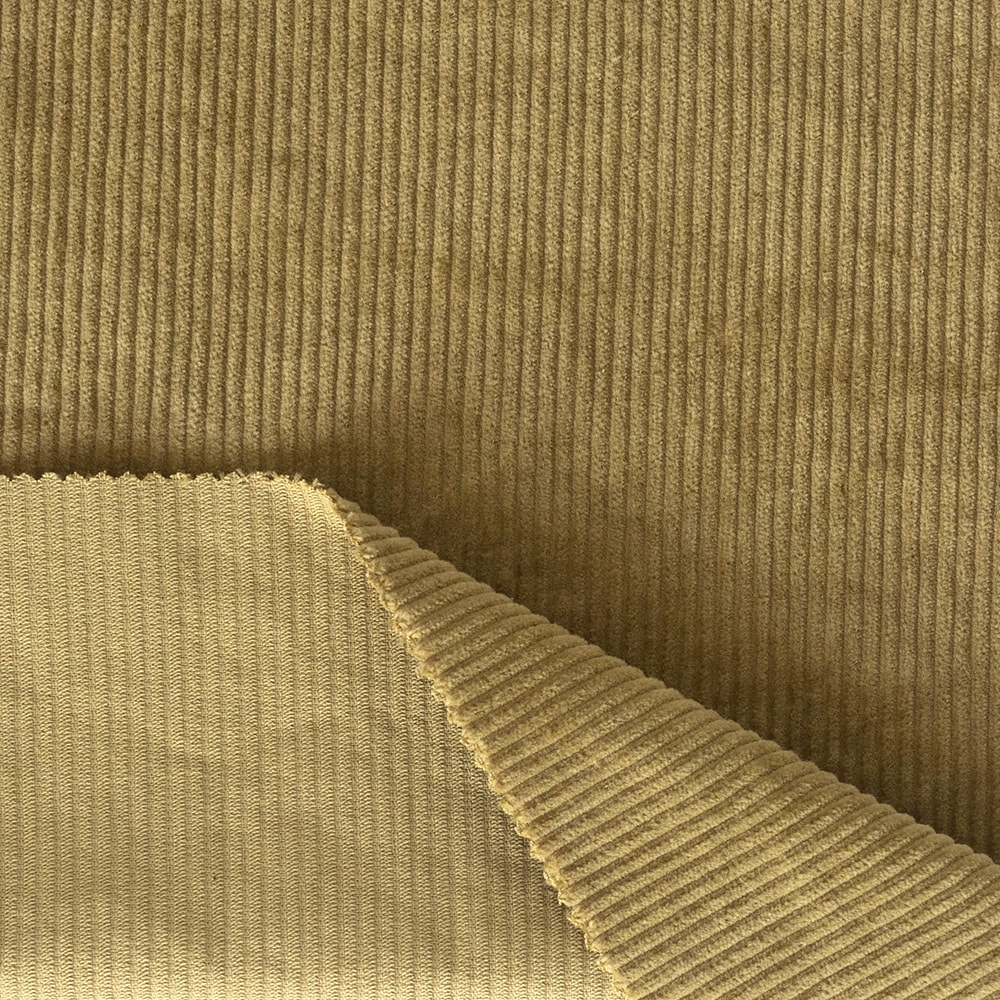 12W Stretch Cotton Corduroy for ApparelStretch cotton-spandex corduroy for dresses, shirts, pants, and bib overalls, offering warmth, softness, texture, and comfort for spring and autumn apparel.View Product →
Soft nonstretch cotton corduroy for children’s clothing presents another set of label decisions. Parents may wash more often, at higher temperatures, and with stain treatments. If the label says “machine wash cold” but the test route uses a gentle cycle and line drying, the instruction may not reflect real use. Buyers should ask for care data that matches the label wording and the market’s typical laundry habits.
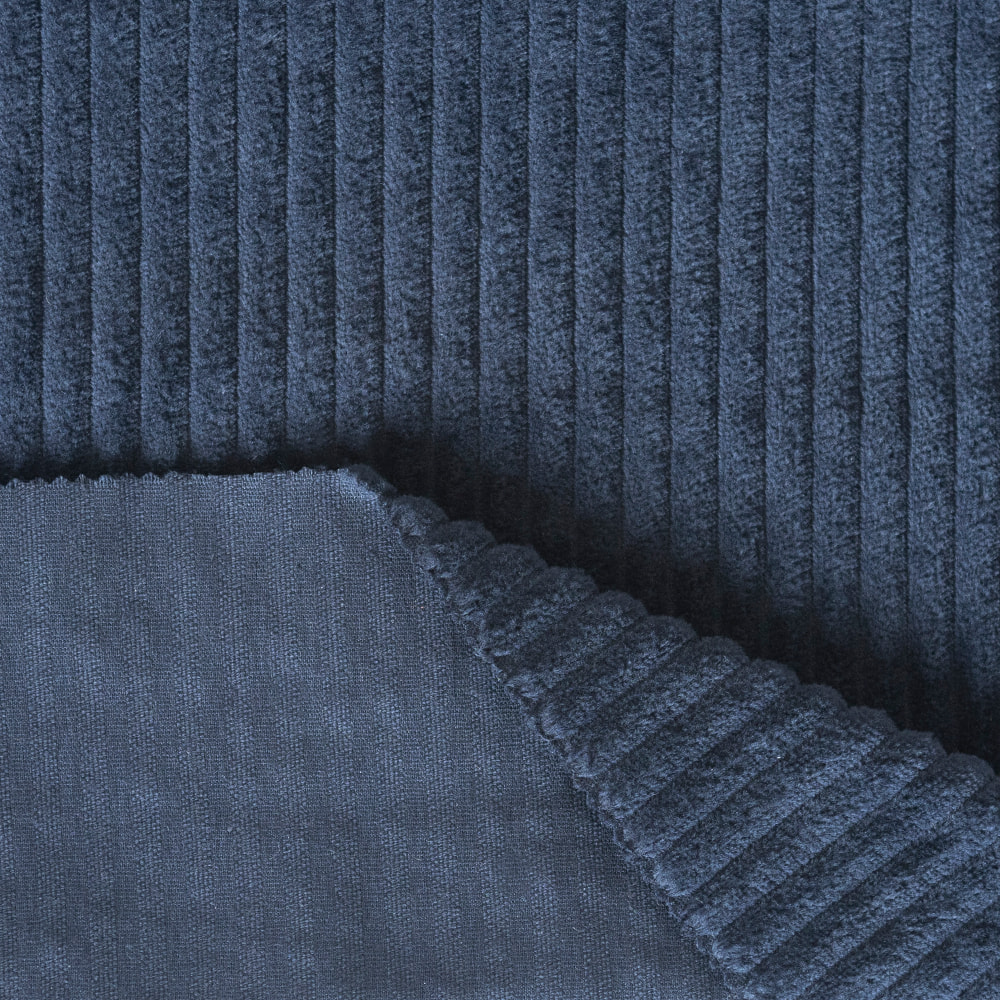 21W Non-Stretch Cotton Baby CorduroySoft cotton baby corduroy for infants’ and young children’s clothing, designed for easy cleaning and resistance to deformation after washing.View Product →
Start with the label route, then test to it. Do not test a convenient process and write a different label. The test should use the same water temperature, cycle, detergent type, drying method, iron setting, and professional cleaning option stated on the final label. If the label allows tumble drying, test tumble drying. If it prohibits bleach, test the likely consumer mistake of using a bleach-containing detergent, because the warning has to be meaningful.
A sample that survives one gentle wash in a laboratory beaker is not proof. Consumers use mixed loads, overdosed detergent, stain removers, and dryers with hot spots. The care labeling rule does not require a mill to predict every misuse, but it does require instructions that are appropriate for normal use. A conservative label can reduce risk, but it should not hide a performance problem. If the only safe instruction is “dry clean only,” the buyer should ask whether that suits the price point, the market, and the customer’s expectation.
Export programs often start with the U.S. care labeling rule because it is explicit and familiar to many buyers, but destination-market requirements can differ. The European Union has fibre labelling rules, while care symbols and retailer expectations may vary by country and customer. Japan and Canada have their own textile labelling frameworks. A single English care label may be acceptable for one order and insufficient for another.
Keep translations aligned with the approved care route. A symbol set without a key can confuse consumers if the meaning is not widely understood in that market. Country of origin, fiber content, importer details, and care instructions may sit on different labels, but they should be reviewed as one system. The buyer, mill, and label supplier should approve the final artwork before bulk, with a signed sample retained for reference.
Use a short checklist to turn the care labeling rule into a production control. It should be specific enough for a fabric mill and simple enough for a sourcing team to audit.
If a supplier cannot provide care data, the label is a guess. If the label is a guess, the buyer owns the return risk. That is the commercial reason the care labeling rule matters: it connects fabric engineering to customer experience.
Before bulk production, approve the fabric and the label as one system. Write the care instruction from tested performance, not from habit or from a previous style. Check the destination market, the retailer’s manual, the trims, and the laundry behavior of the end consumer. A care labeling rule review done at the sample stage costs far less than a shipment hold, a return program, or a label recall after the garments are already packed.
Please feel welcome to contact our friendly reception staff with any general call us

+86 139 6116 7127

Email: cloud@jacquardcloth.com

Textile Industry Zone, East Hutang Town, Wujin District,213100 Changzhou,China
