

 English
 日本語


Get Directions
Textile Industry Zone, East Hutang Town, Wujin District,213100 Changzhou,China
A shopper lifts her phone, taps a jacket, and watches it settle over her shoulders. The silhouette looks right. Then she rotates the view and the corduroy goes flat: no wale, no shadow between the ribs, no weight in the hem. She closes the tab and buys nothing.
That moment explains most of what goes wrong with augmented reality for fashion. The body tracking works, the phone is capable, the 3D garment loads in under two seconds, and the preview still fails, because the fabric underneath it was described in a spreadsheet rather than measured. AR try-on looks like a rendering problem. Underneath, it is a textile documentation problem.
Content
An AR garment is only as believable as the physical rules attached to it. The software needs to know how a cloth bends, how far it springs back, how thick it is, how light catches the rib, and how much it will move with a walking body. When those numbers are missing, the renderer falls back on a default "generic woven" behaviour, and shoppers spot the lie immediately even if they cannot explain why.
The commercial effect is measurable. Retailers that have run virtual try-on consistently report return rates falling by double-digit percentages, because the shopper self-selects out of the wrong fit before checkout rather than after delivery. But that gain only appears when the digital garment behaves like the shipped one. A preview that flatters the fabric produces more confident purchases and more disappointed returns, which is worse than no preview at all.
For a mill, this shifts the job description. Supplying a beautiful swatch is no longer the whole deliverable; supplying the parameters that let a brand rebuild that swatch digitally is becoming part of the order.
Most of the specification a 3D team needs already exists on a mill's internal tech sheet. The gap is format: it has to be exported as numbers, per colourway and per finish, not as adjectives like "soft" or "crisp". The table below maps what the renderer consumes to what a buyer should request.
| Attribute | What AR does with it | What to request | Typical failure |
|---|---|---|---|
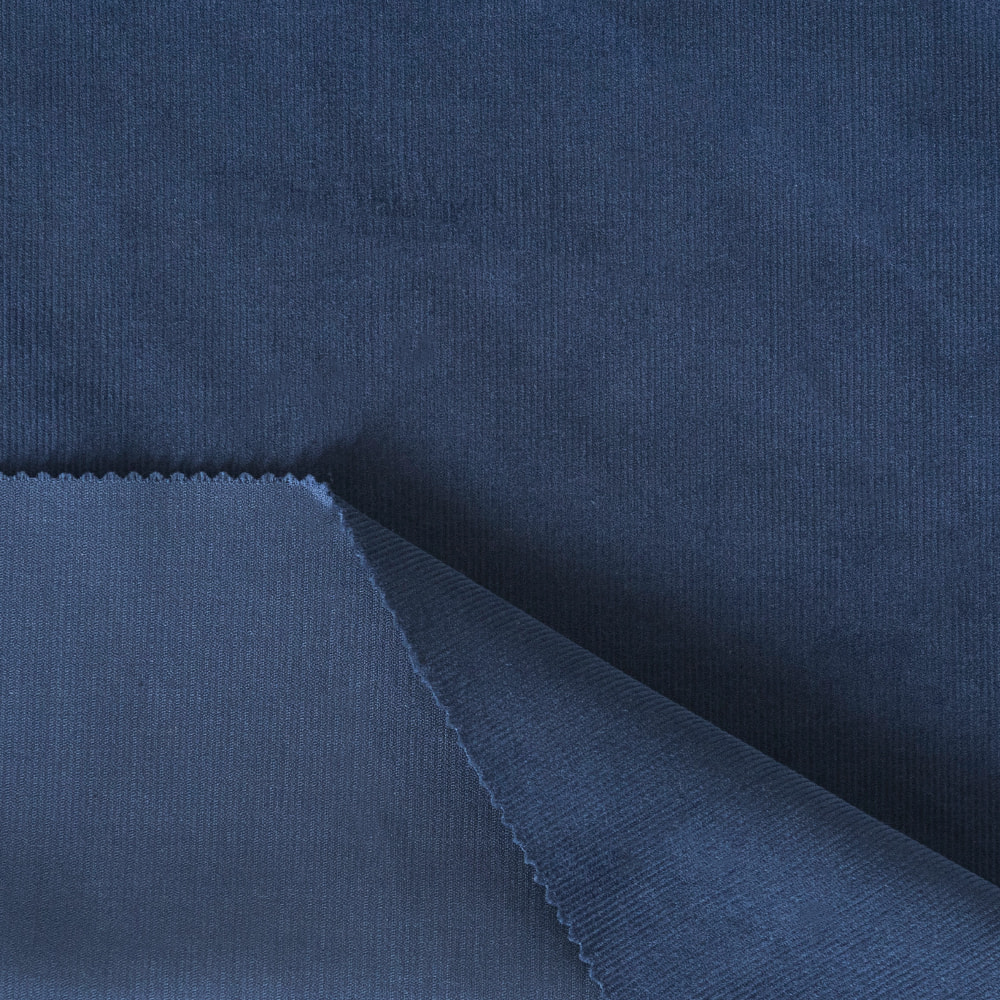
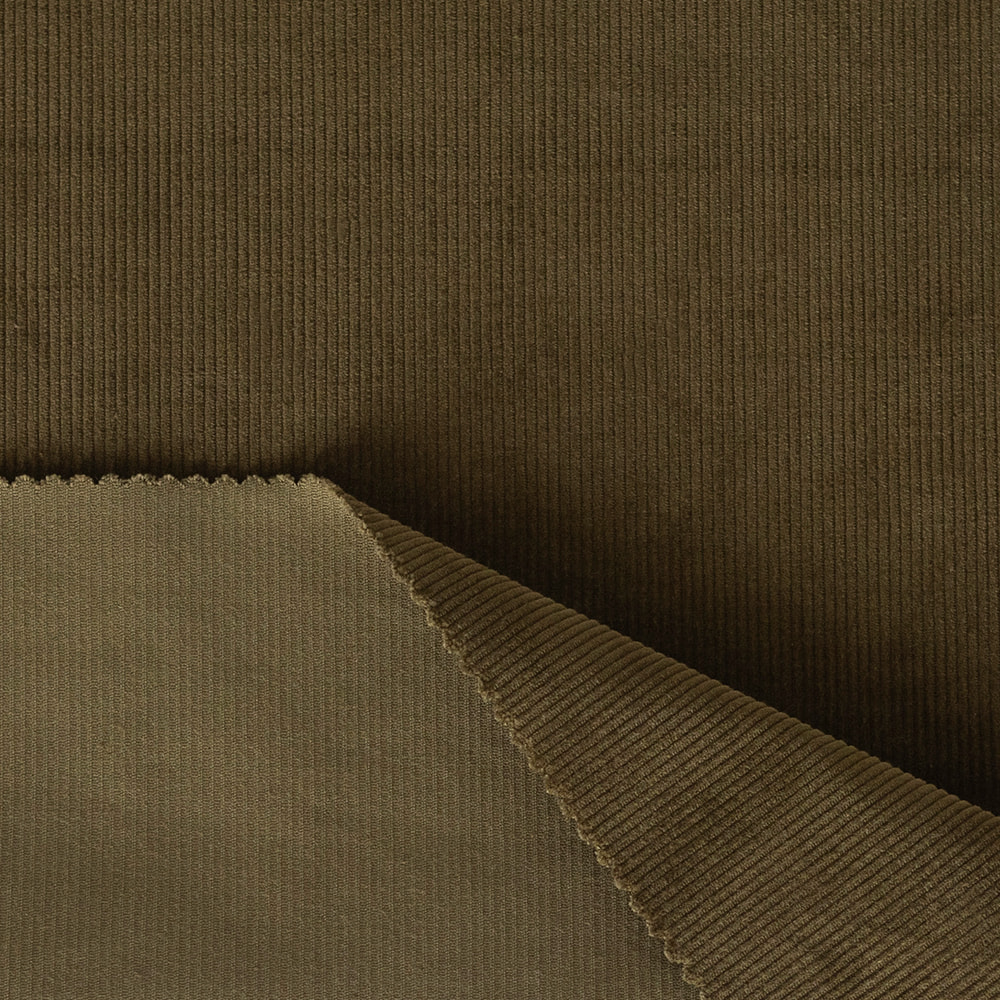
| Wale count and width | Generates surface relief and the shadow rhythm across the rib | Wale number (3.5W to 25W) and rib width in millimetres | Fine 21W and 24W ribs blur into a flat texture on a phone screen |
| Weight | Drives bending, hem fall and how the garment settles at rest | Finished weight in g/m² with a tolerance band | Light cloth rendered heavy looks board-stiff; heavy cloth rendered light floats |
| Stretch and recovery | Controls how the garment hugs the body and returns to shape | Stretch percentage by direction, recovery rate, one-way or bi-stretch | Non-stretch corduroy stretches with the arm because the rig assumes elastane |
| Drape and stiffness | Sets fold frequency and silhouette in motion | Bending length or a mill drape note, plus finishing route | Stiff double weave shown as fluid as a shirt fabric |
| Surface sheen | Places specular highlights along the pile | Fibre blend and dye method (piece-dyed, yarn-dyed, printed) | Tencel and viscose blends render matte; cotton renders glossy |
| Colour consistency | Keeps the digital colourway honest across sizes and lots | Lab dip reference and a stated colour tolerance | Yarn-dyed stripes vanish; lot-to-lot drift shows up in customer photos |
| Shrinkage | Predicts the fit after the first wash | Shrinkage percentage after washing and the finish applied | The preview fits in the app and not on the customer |
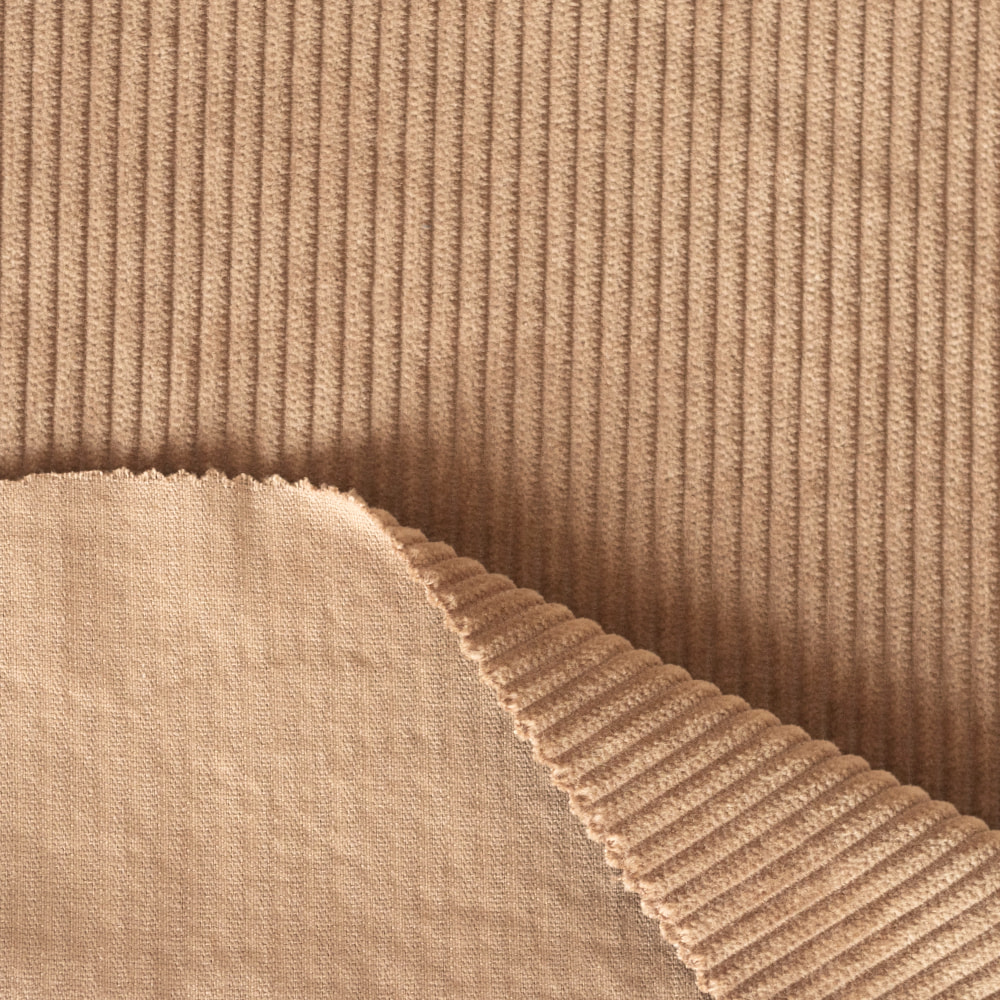
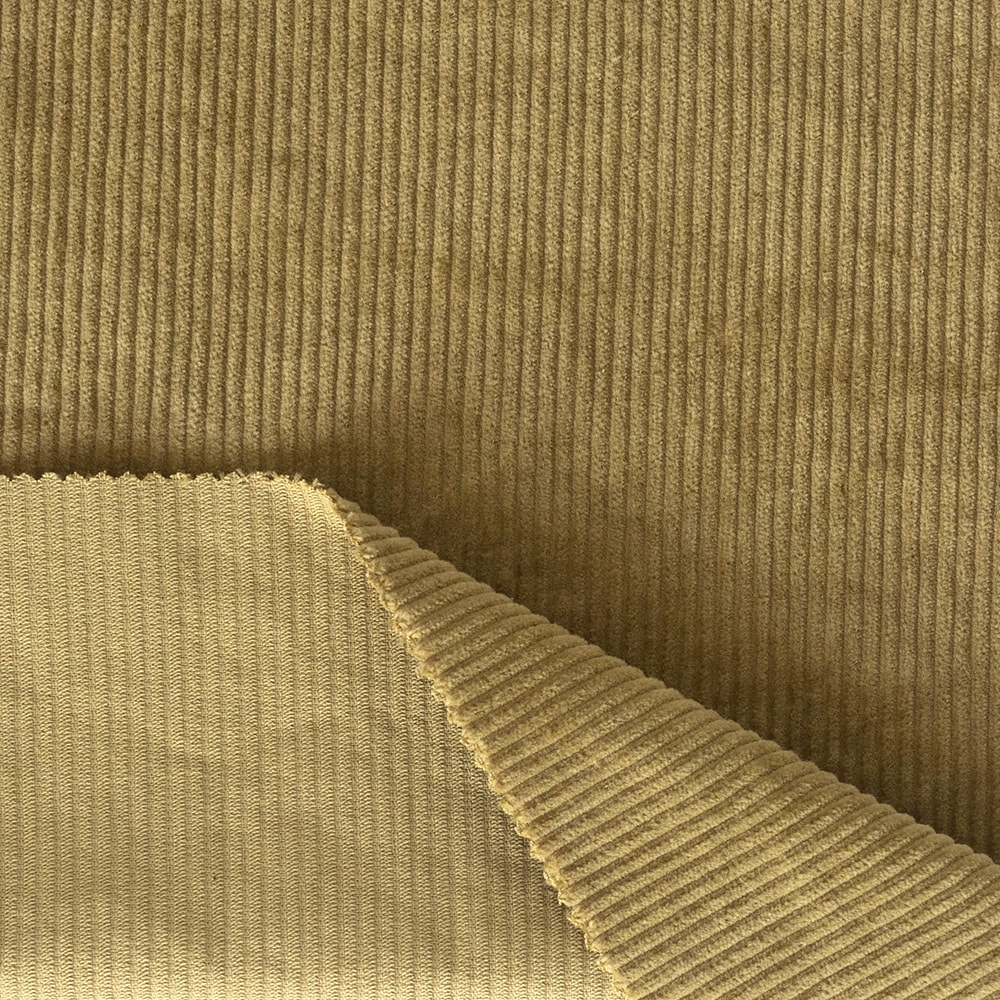
Corduroy is an unforgiving test case because its character lives in the third dimension. A pile rib catches light on one face and shadows on the other, so the renderer needs a normal map built from the actual wale geometry rather than a generic herringbone or twill texture. Get the rib height wrong and the fabric reads as suede; get the rib spacing wrong and a 6W upholstery cloth looks like shirting.
Structure matters just as much. A tight twill double weave holds a jacket shape with almost no drape, while a fine 21W cotton falls into soft folds at the wrist. If both share one physics preset, at least one of them will look wrong on screen. Stretch adds another layer: a bi-stretch body fabric moves in two directions and returns quickly, which is exactly the behaviour shoppers notice when they raise an arm in front of a camera. The comfort differences between one-way and two-way stretch are already well documented on the physical side, and the digital side simply inherits them.
 7.5W Double Weave Stretch Corduroy FabricA 7.5W double-weave stretch corduroy in 99% cotton/1% spandex at 270 gsm, relevant for winter suits and trousers where structure and stretch matter.View Product →
Two-fibre blends complicate colour as well. A Tencel-cotton corduroy carries a quiet lustre that flat cotton cannot reproduce, and a printed fine wale introduces pattern repeat that has to scale with the garment piece rather than tile across it. Brands that skip this step usually discover it in the reviews, not in the studio.
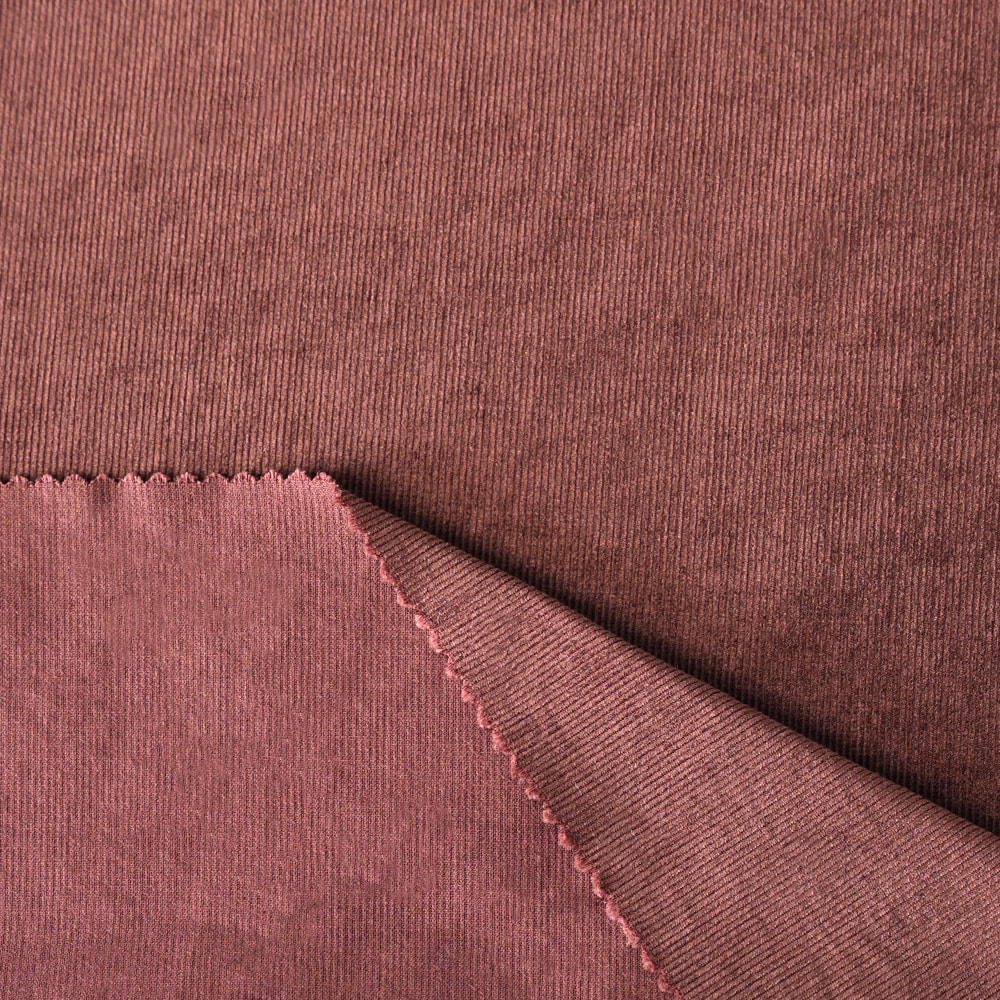 8W Tencel-Cotton Thick Corduroy for JacketsA 300 gsm 8W Tencel-cotton corduroy with a soft, drapey hand, suited to jackets and casual pants where the cotton-Tencel blend affects colour and fall.View Product →
A practical reference point: bistretch corduroy comfort depends on recovery and weight together, not on the elastane percentage alone, and any AR preset has to reflect the same combination.
Digitising a fabric range is less expensive than most sourcing teams assume, provided the work is sequenced properly. The order below keeps effort proportional to commercial value.
Mills with in-house weaving, dyeing and finishing have an advantage here, because the parameters can be captured at the source instead of reconstructed from a swatch posted abroad. That is the working model at Changzhou Cloud Cloth Industry, where 200 air-jet looms and 20 jacquard looms run alongside cutting, dyeing and finishing, so a spec sheet and the cloth it describes come from the same floor.
Not every virtual try-on deserves the same trust. A few checks separate a useful selling tool from an expensive animation.
A coarse 6W upholstery-quality corduroy is a good stress test for any vendor, because it refuses to drape and exposes every shortcut in the physics setup.
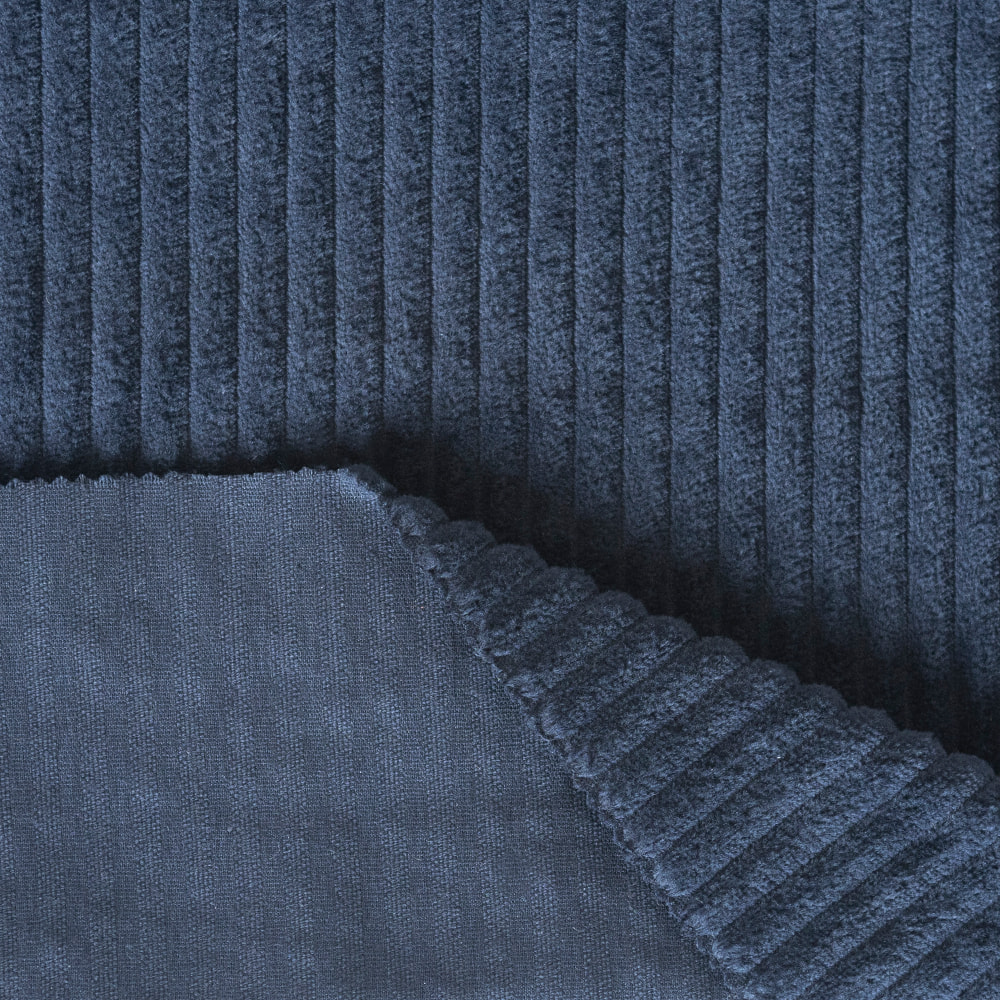 6W Rough Cotton Non-Stretch Corduroy Upholstery FabricA 290 gsm 6W rough cotton non-stretch corduroy for upholstery and garments, relevant where a coarse, structured hand and limited drape are the point.View Product →
AR resolves uncertainty about silhouette, proportion and colour on a screen. It does not resolve hand feel, and hand feel is what corduroy buyers argue about: whether the pile is dense enough not to crush at the elbow, whether the back is smooth enough to line, whether a 12W stretch article is warm enough for a November trouser. No phone camera delivers that.
The sensible division of labour is therefore straightforward. Let AR remove the wrong options before a sample is cut, and let the swatch confirm the right one. Brands that treat the virtual preview as a filter rather than a verdict get the return-rate benefit without the disappointment. Mills that supply honest, measured fabric data get to sit inside that filter instead of being checked against it later.
For anyone building this workflow, the starting point is unglamorous: a scale, a ruler, a light box and a spec sheet that someone actually fills in per colourway. The rendering pipeline will do the rest, and the shopper on the bus will never know how much measuring stood behind the jacket that finally looked like cloth.
Please feel welcome to contact our friendly reception staff with any general call us

+86 139 6116 7127

Email: cloud@jacquardcloth.com

Textile Industry Zone, East Hutang Town, Wujin District,213100 Changzhou,China
